

Nepal UK
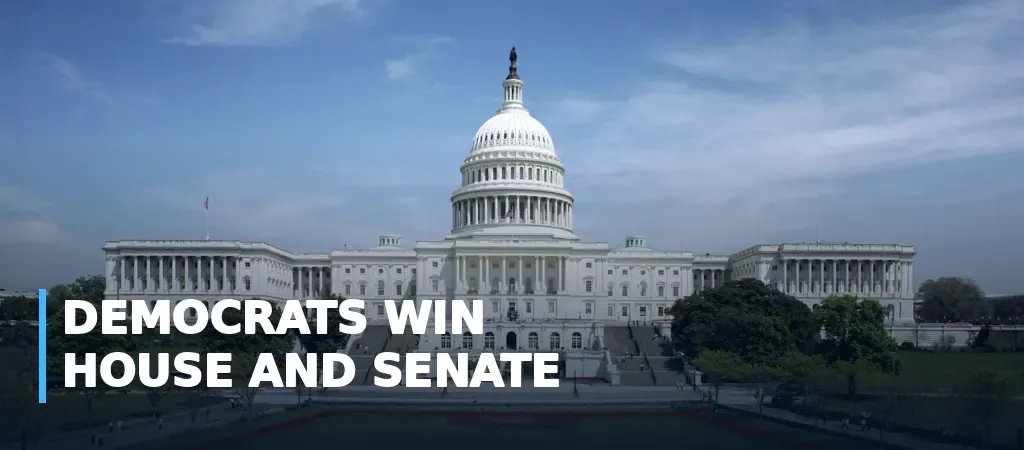
Democrats have won control of the US Senate and, according to major US broadcasters, the House of Representatives in Tuesday's midterm elections, a result that removes Donald Trump's party from unified control of Congress for the final two years of his term. The Associated Press called the Senate for Democrats overnight, and Mr Trump congratulated the winners in a call to a US television network early on Wednesday. Latest verified update: about 5.41am GMT, 4 November 2026. Final seat totals were not available in the sources reviewed, and the Michigan Senate race was still uncalled when last reported.
Before the vote, Republicans held 53 Senate seats and a narrow House majority of 218 to 214, with one independent and two vacancies. Democrats needed a net gain of four Senate seats and about three or four in the House. Reports from election night describe Democratic wins in states that had been counted as safe for the Republicans. Democrat Roy Cooper won the North Carolina Senate race, and the Associated Press called the open Iowa seat for Democrat Joshua Turek, who led by nearly five points with 91 per cent of the vote counted. Democrats were also reported to have won Senate races in South Carolina, Texas and Kansas. In state contests, Xavier Becerra won the California governorship and Gina Hinojosa was reported to have defeated Governor Greg Abbott in Texas.
Mr Trump was not on the ballot, and he said as much on Truth Social: "I wasn't on the Ballot and if I was, we would have won IN A LANDSLIDE!" Yet the exit polling points to a verdict on his presidency. Early exit polls put his approval at 38 per cent, which CBS News described as the lowest for a president in a midterm election that it tracks. In polling attributed to NBC News, 75 per cent of voters said the economy was in rough shape and 65 per cent said Mr Trump's policies had made it worse. Between 86 and 88 per cent were concerned about the cost of fuel, food and utilities.
The decisions most often linked to those numbers are these, each with its own evidence:
Causation is contested. Analysts quoted in the reporting disagree on whether foreign policy or the cost of living drove votes, and one analysis argues the two cannot be separated because the war raised fuel and fertiliser costs. Mr Trump blamed Governor Abbott's defeat on Mr Abbott having become a "RINO", and argued that Fox News had given Democrats too much coverage. These are his claims, and none was independently verified.
The effects reach Nepal through the same channels that carried the war's costs. The Kathmandu Post reported in June that new Nepali labour permits had fallen by nearly 19 per cent year on year, that approvals for West Asian countries were suspended from 1 March to 20 April, and that about 60 per cent of Nepali migrant workers are employed in the Gulf. Nepal's October tourism figures show the United States as the top source market, with 17,437 arrivals, according to a daily news summary, a figure NepalUK has not verified against official data.
A Democratic Congress cannot end the war on its own, and the president retains wide control of foreign policy and trade. It can, however, hold hearings, withhold funding and force votes. How far Mr Trump changes course on Iran, and how quickly fuel prices ease, will shape remittance flows, Gulf job markets and travel demand relevant to Nepali families in Nepal, the UK and the US. NepalUK will report the final seat counts once the remaining races are called.


