

Nepal UK
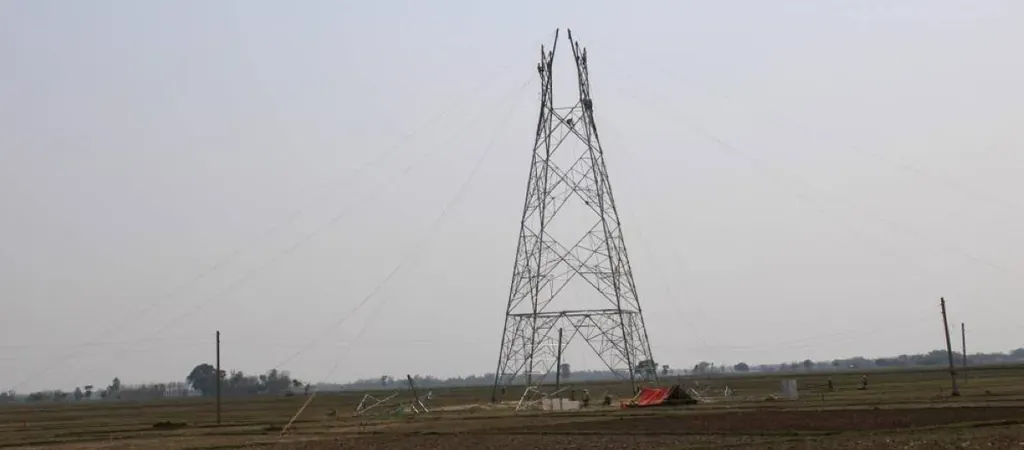
Nepal and the United States are reported to be close to extending the $747 million Millennium Challenge Corporation Compact by up to a year. The extension would not add cost, but it still needs Cabinet and MCC Board approval.
Nepal and the United States are close to agreeing a one-year extension to the Millennium Challenge Corporation (MCC) Compact, according to OnlineKhabar English on 7 October, which cites Ministry of Finance sources. The Finance Ministry has not yet sent the proposal to Cabinet, and the MCC Board may consider the request at its December meeting. The report rests on anonymous ministry sources, and no official statement was found at the time of writing.
What the Compact is
The Compact, signed on 14 September 2017 and in force since 30 August 2023, combines a US contribution of $550 million with $197 million from Nepal, a total of $747 million, to build electricity transmission lines and upgrade the East–West Highway. Under the five-year rule it is due to finish in August 2028.
Why more time is being sought
Two causes are cited. A US foreign-assistance review that began on 20 January 2025 halted implementation for around seven months before the US recommended continuing in late July 2025. And floods on the Trishuli River last year and this year caused further delays. Some contracts already run beyond the present deadline. A source quoted by OnlineKhabar said work is under way to extend by up to 12 months "without increasing the project cost", and described an "in-principle understanding" between the sides. Finance Minister Swarnim Wagle raised the issue with Jason Small, MCC's acting vice president, during a recent US visit.
Progress so far
An 18-kilometre line from New Butwal to the Indian border was completed on 14 September, within nine months of groundbreaking. Contracts have been awarded for a further 297 kilometres of lines and three substations, and for upgrading the highway between Dhanakhet and Lamahi. A tender for 315 kilometres of line was cancelled after the lowest bid came in about 60 per cent above estimate; an extra $50 million grant was then approved.
Why it matters to Nepali readers
Transmission capacity determines whether Nepal's growing hydropower fleet can reach homes, industry and export markets. The August–September flood damaged generation capacity, which the reconstruction assessment values heavily, so grid reliability and finishing the lines matter more, not less. For contractors and engineers, an extension may preserve work already awarded.
Competing considerations and uncertainty
An earlier Kantipur report (18 August) described the extension proposal as having been stalled at the Finance Ministry for about three months, which suggests that "close to agreement" is not the same as approved. Extending beyond the five-year window depends on MCC's own rules and Board decision, and we have not confirmed that from MCC. Cost neutrality is a claim by an unnamed source and should be tested once any formal text appears. Readers should treat the one-year figure as a ceiling ("up to"), not a promise.
What happens next
Cabinet approval, a formal request to MCC, and a Board decision, possibly in December.


