
Nepal UK
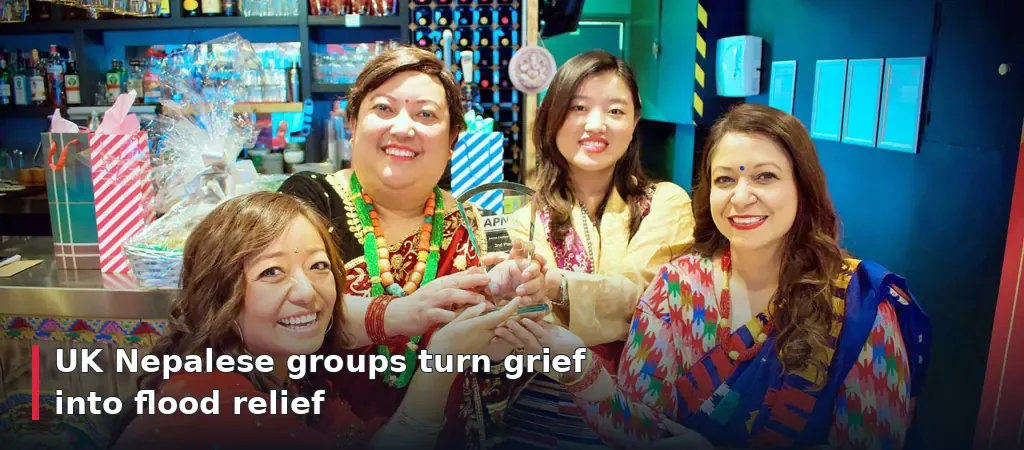
Photo : Nepali Link
When the Embassy of Nepal in London presented a Letter of Appreciation to Hindu Aid UK on 23 October, it recognised one charity. It also marked a wider pattern: since the 26 August floods in Rasuwa, Nepalese associations, restaurants, temples, professionals and charities across the UK have raised substantial sums for relief.
Bipin Duwadi, Chargé d'Affaires, presented the award on behalf of the Ambassador to Hindu Aid UK's trustees, Mihir Sarkar, Tapan Saha and Ajit Saha. The Embassy praised the charity's quick response to families affected by floods that caused widespread deaths and displacement. In their response the trustees said: "This recognition inspires us to continue our mission of seva, selfless service." They said the honour belongs to donors, volunteers and supporters, and appealed for continued help.
At community level, the effort has often been modest in scale and local in character. On 4 October, "Momos for Nepal", a charity dinner at Kailash Momo in Welling, south-east London, raised over £2,600 for the Nepalese Doctors' Association UK (NDA UK), according to a report published on 25 October. It was organised by Swasthya Chiya, a community-led health initiative founded by Dr Numa Thebe that works to reduce health inequalities among Greenwich's Nepalese community, together with the restaurant's co-owners.
The evening opened with the lighting of the panas by chief guest Dr Arati Thapa, chair of NDA UK, followed by a minute's silence for the victims. The programme included live music, traditional Lakhe and Jhankri dances, a poetry reading, a three-course Nepalese meal and a raffle. On 12 October, Dr Thapa presented a cheque to Nepal's Finance Minister, Dr Swarnim Wagle, as part of wider fundraising, the report says. The organisers, Dr Thebe and Ms Sobha Sharma Kandel, said the dinner "demonstrated what can be achieved when a community comes together with a shared purpose".
An early-October review of UK diaspora giving, published by Ratopati, lists dozens of groups, from regional societies to restaurants, that sent money to the Prime Minister's Relief Fund or to affected communities. It reports that Nepalese associations in the UK contributed Rs 53,432,442.25 to the first phase of a global campaign by the Non-Resident Nepali Association (NRNA), by far the largest national share listed in an NRNA financial statement dated 1 October. The report also records a candle-lighting event by Bexley Nepali Samaj attended by more than 160 people, including the local mayor and councillors.
These figures are drawn from organisations' own statements as reported by Ratopati, and NepalUK has not independently audited them. The report itself contains an internal discrepancy in the NRNA global total (about Rs 66.5 million in the text against Rs 66.8 million in the headline), so exact totals should be treated with caution.
The Ratopati piece raises a question that resonates in UK Nepalese circles: whether the diaspora should be seen only as a source of emergency donations or also as a long-term partner, bringing skills, investment and international connections. Fundraising has also been accompanied by practical contributions: the report says DNA testing kits and equipment were sent to help identify victims.
For donors, the lessons are practical. Giving through registered charities, such as those that can document transfers to official relief channels, makes it easier to trace funds. Organisers can help by publishing amounts raised, dates and recipients. Some of the campaigns reported are still running, including a second-phase campaign by Nepali Samaj Nottingham.
What remains unknown is how much of the money raised has reached affected families and how reconstruction will be financed over time. Nepal's own assessment puts recovery needs at about $4.8 billion, far beyond what community fundraising can cover. The UK community's role is therefore likely to shift from emergency giving to sustained engagement, and from one-off events to long-term partnerships. NepalUK has not obtained a response from the Embassy or from NDA UK for this report.


