

Nepal UK
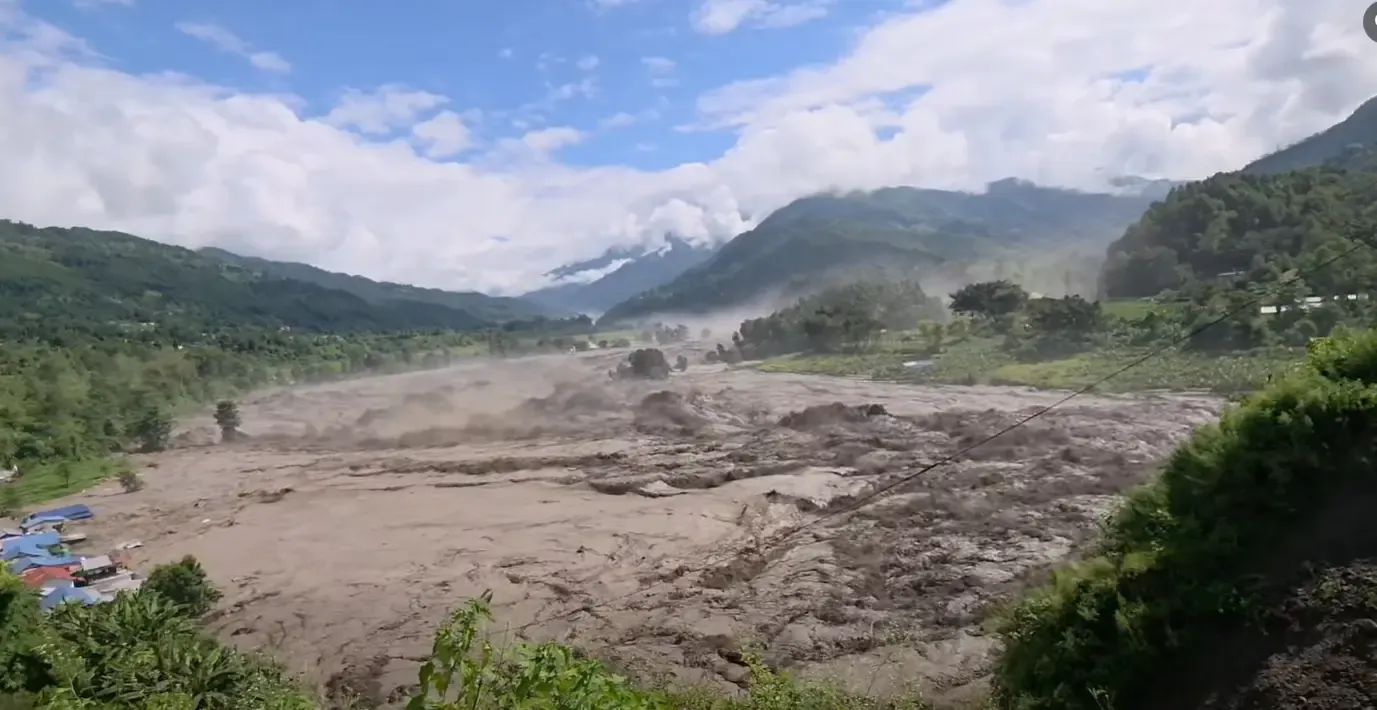
A British-run trekking party bound for one of Hinduism's and Buddhism's holiest sites, Mount Kailash in Tibet, has become the human face of Wednesday's catastrophic Bhotekoshi flash flood — and the unfolding story of how many of them are missing says as much about the fragility of cross-border pilgrimage tourism as it does about the flood itself. As of Wednesday evening, Nepal's Prime Minister's Office confirmed at least 95 dead nationwide, with Nepal Police separately reporting 157 bodies recovered and over 40 people hospitalised. Nepal's Tourism Board raised its missing-persons count from 384 to 403, of whom 33 are UK citizens — up from an initial estimate of 12 — travelling with the operator Alpine Eco Trek on a nine-day pilgrimage itinerary that had brought them to the Nepal-Tibet border at Rasuwagadhi at the exact moment the Bhote Koshi river surged.
What distinguishes this incident from routine Himalayan trekking accidents is where the group was when disaster struck: not deep in a remote trekking corridor, but at an international border immigration checkpoint. Alpine Eco Trek manager Kumar Adhikari told the Press Association that his tour guides' phones went dead at 8.40am local time — the moment, he believes, the group would have been inside Tibet's border immigration office, on the assumption that a government building would be the safest place to shelter. Footage later released by Chinese authorities showed that even the Tibetan side of the crossing was engulfed. "We were hoping that inside it was safe," Adhikari said. "But later the video came from China's government which showed even Tibet's side was hit by the flood." He described fielding "thousands" of missed calls from anguished UK families, admitting he had "not been able to give them any updates."
That detail matters for how this story should be read in the UK Nepali community: this was not a group of backpackers who wandered off-piste. It was a licensed, structured pilgrimage tour — the kind regularly booked by Hindu and Buddhist pilgrims of all backgrounds, including members of the British Nepali and British Indian diaspora — passing through a border crossing during ordinary operating hours. The randomness of the timing is precisely what has made the story resonate so widely: any group on that itinerary that week could have been caught the same way.
Early UK coverage, understandably working from Nepal Tourism Board's first release, reported 12 British nationals missing. By the evening update, that figure had nearly tripled to 33, out of 341 foreign nationals still unaccounted for (the rest of the 403 are a mix of 133 Indian pilgrims also headed to Kailash, 47 Americans, 34 Australians and 24 Canadians, according to tourism board spokesman Sunil Sharma). This is not evidence of a cover-up or of shifting facts being hidden — it reflects the genuine difficulty of establishing headcounts when communications infrastructure across an entire flood-hit border region is down, and when tour operators are cross-checking manifests against Nepal's tourist police, Chinese authorities and grieving families simultaneously. But it is a reminder to readers, and to NepalUK specifically, that any UK diaspora outlet reporting fatality or missing-persons figures on a live disaster should timestamp its figures and expect them to be revised, sometimes sharply, within hours.
The disaster is the first major overseas consular crisis facing Andy Burnham's government since he became Prime Minister in July 2026, and his administration's response has followed the now-standard script: a solidarity statement ("these scenes emerging from along the Nepal-China border are devastating"), a promise to do "everything we can," and instructions to follow FCDO travel advice. Foreign Secretary Ed Miliband and Baroness Winterton, the Foreign Office's Indo-Pacific minister, issued parallel statements, while the FCDO published direct consular assistance numbers for British nationals and families in the UK. None of this is unusual by the standards of past British consular responses to Nepali disasters — including the 2015 earthquake — but it will be closely watched by the UK Nepali community for a specific reason: whether the "everything we can" pledge translates into practical support (repatriation flights, liaison staff sent to Kathmandu, funding for search-and-rescue coordination) or remains at the level of statements. For a diaspora community that has, in past disasters, felt that UK institutional attention to Nepal is fleeting once headlines move on, that follow-through will be the real test.
One detail largely absent from mainstream UK coverage but directly relevant to NepalUK's audience: Alpine Eco Trek also confirmed four of its own Nepali tour guides — aged 29, 35, 38 and 45 — are among the missing. These are Nepali citizens whose livelihoods depend on shepherding foreign pilgrims and trekkers safely across exactly this kind of route, and whose families, unlike those of the British tourists, are unlikely to receive ministerial statements or FCDO consular hotlines. Their fate deserves the same visibility in diaspora coverage as that of the British nationals — not least because many UK-based Nepalis have direct or extended family working in the trekking and tourism industry that supports routes like this one.


