
Nepal UK
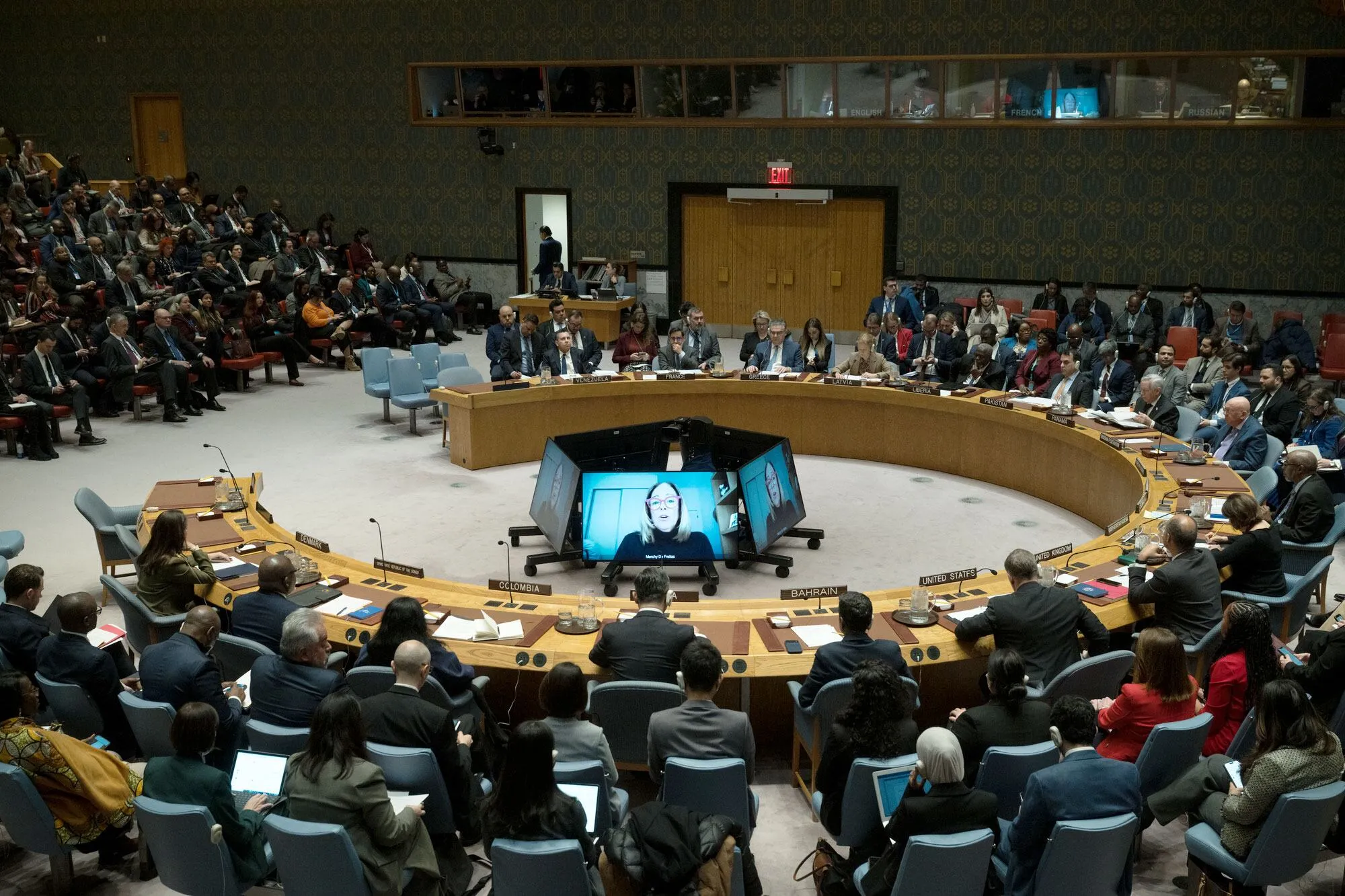
Photo: UN
New York – The United Nations Security Council members are split over whether Washington’s raid on the presidential palace on early Saturday in Caracus upholds accountability – or undermines a foundational principle of international order.
Some delegations argued the action was exceptional and justified; others warn it risks normalising unilateral force and eroding state sovereignty.
The UN Secretary-General, Antonio Guterres, cautioned that international peace and security rest on all Member States adhering to the UN Charter.
The United States rejected characterisations of its actions as military aggression, describing the operation as a targeted law enforcement measure facilitated by the military to arrest an indicted fugitive.
Ambassador Michael Waltz said, “There is no war against Venezuela or its people. We are not occupying a country,” he said. “This was a law-enforcement operation in furtherance of lawful indictments that have existed for decades.”
Venezuelan Ambassador Samuel Moncada described his country as the target of an illegitimate armed attack lacking any legal justification, accusing the US of bombing Venezuelan territory, the loss of civilian and military lives, and the “kidnapping” of President Nicolás Maduro and First Lady Cilia Flores.
“We cannot ignore a central element of this US aggression,” he said. “Venezuela is the victim of these attacks because of its natural resources.”
Colombia, Brazil, Mexico, Chile and Panama, underscored their region’s long-standing declaration as a zone of peace and warned that unilateral military action risked destabilising the Western hemisphere and aggravating displacement flows.
Russia and China delivered some of the strongest criticism, characterising the US action as armed aggression and warning against the normalisation of unilateral force.
This position was echoed by countries beyond the Americas – including South Africa, Pakistan, Iran and Uganda – which warned the selective application of international law risks undermining the entire collective security system.
Representatives of Moscow and Beijing called for the immediate release of President Maduro and stressed the inviolability of head-of-State immunity under international law, framing the situation as a test of whether Charter principles apply equally to all States.
The United Kingdom highlighted years of suffering endured by Venezuelans – poverty, repression and mass displacement – while underscoring that respect for the UN Charter and the rule of law is essential for global peace and security.
Denmark and France acknowledged the imperative to combat organised crime and protect human rights – but warned that counter-narcotics efforts and accountability must be pursued through lawful, multilateral means.
President of Venezuela Nicolás Maduro is in custody at a New York detention centre after he was captured during a daring raid by the US Army personnel early Saturday.
Maduro and his wife, First Lady Cilia Flores, were taken from the capital Caracas to the Metropolitan Detention Center in Brooklyn to face drug trafficking-related charges.
He has previously denied being the leader of a drug cartel
Venezuela has announced a state of national emergency and denounced the "military aggression."


