

Nepal UK
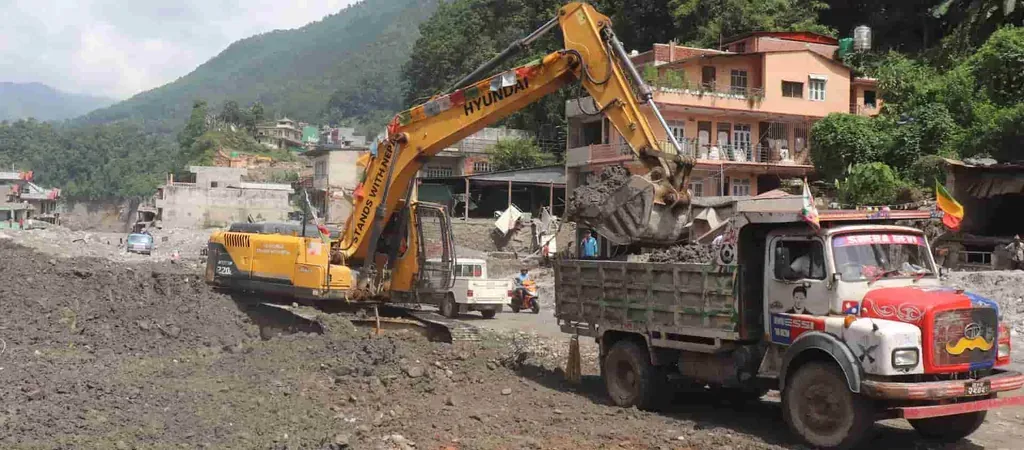
Photo: Ramhari Neupane / RSS.
An official assessment puts reconstruction after the Bhotekoshi–Trishuli flood at Rs 723.31 billion, while relief funds have gathered about Rs 13 billion. How Nepal closes that gap, and what the UK and diaspora contribute, will shape recovery for years.
Nepal is counting the cost of the flood that tore down the Bhotekoshi and Trishuli river corridor in late August, and the arithmetic is daunting. A Rapid Damage and Needs Assessment (RDNA), reported by Ratopati on 14 September, puts total loss at Rs 408.29 billion (about US$2.70 billion) and reconstruction needs at Rs 723.31 billion. Weeks later, the effects are still visible: OnlineKhabar's front page this week reports repairs on flood-damaged roads, bailey-bridge work on the Galchhi–Betrawati road and a fundraising exhibition for flood victims.
What the assessment says
According to Ratopati's account of the RDNA, direct physical damage came to Rs 274.48 billion and disrupted production and services added Rs 133.81 billion. Infrastructure accounts for Rs 473 billion, or about 75 per cent, of the reconstruction requirement, with the energy sector the largest single component: Rs 134.70 billion in physical damage. For comparison, the article notes the 2015 earthquake post-disaster assessment put total damage at Rs 706 billion.
The funding gap
The Prime Minister's relief funds had collected about Rs 13 billion, under 2 per cent of the requirement. Committed or received external support listed in the report includes a US$5 million Asian Development Bank grant, US$2 million from China and US$8.5 million under a World Bank facility, with a further US$150 million described as on standby.
Officials strike different tones. Finance Minister Swarnim Wagle said coordination is "ongoing with everyone" and that a more detailed assessment led by the National Planning Commission would follow within four weeks. Finance Secretary Ghanashyam Upadhyay said the government can mobilise the necessary resources. Prime Minister Balen Shah said there will be no budget shortage for relief and reconstruction. Others are more cautious: Dharamraj Upreti, chief executive of the disaster-management authority, said capital spending averages only 32–35 per cent of budget, making domestic funding of Rs 723 billion "nearly impossible", and recommended pursuing climate loss-and-damage funds. (These figures were reported by Ratopati; they should be checked against the official RDNA when it is published.)
The UK dimension
On 1 September Lord Popat urged the House of Lords to do more for Nepal. For the government, Lord Wood of Anfield listed up to £750,000 via the Red Cross movement, £1 million through Start Fund Nepal and up to £250,000 for humanitarian experts, as reported by OnlineKhabar. Other outlets have reported different UK pledge totals, so NepalUK treats the higher figures as unconfirmed until a UK Government source is checked. OnlineKhabar also carries a report on Nepalese in the UK raising relief funds, which we have not yet read in full.
Why it matters beyond the numbers
Nepal contributes a tiny share of global emissions, a point the disaster authority itself stressed, yet it bears glacier-related hazards. A speaker quoted by AFP on 8 October, Jamling Tenzing Norgay Sherpa, called the disasters "a warning for us". His remarks, made around the release of a film about his father, are comment rather than evidence, but they echo what Everest guides report: water at Camp 2 where there was once only ice.


