

Nepal UK
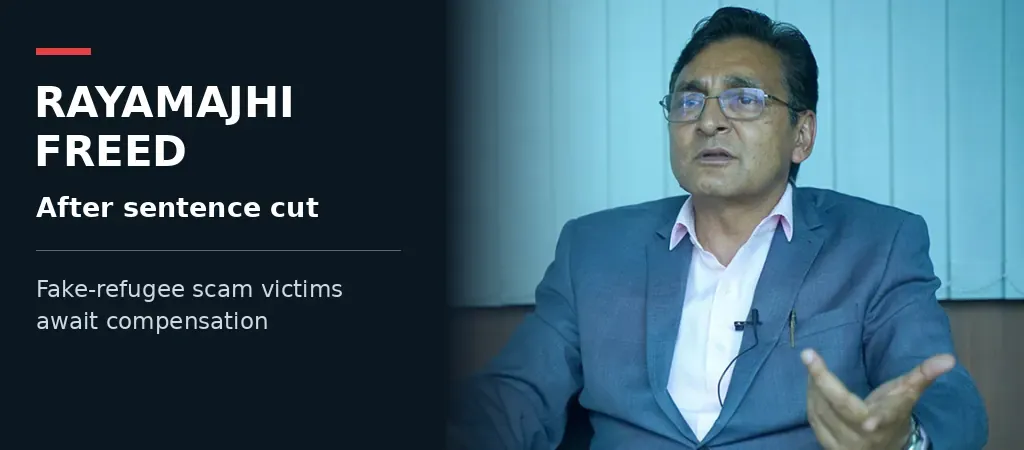
Former deputy prime minister Top Bahadur Rayamajhi walked out of Dillibazar prison on Thursday morning after the Kathmandu District Court reduced his four-year sentence for his part in the fake Bhutanese refugee scam, one of the largest fraud cases involving Nepal's political class.
Rayamajhi, 65, qualified for a 25 per cent reduction under legal provisions for senior citizens. The court cut his term by a year to three years and directed prison authorities to release him through a revised warrant. Prison officials said the warrant reached them before the Tihar festival, and he was released on Thursday. Reports did not say how long he had been in custody, nor whether any appeal is pending. NepalUK has not found a public response from Rayamajhi.
Rayamajhi was arrested on 14 May 2023 over a scheme that took money from Nepali citizens by falsely promising to register them as Bhutanese refugees eligible for resettlement in a third country, in practice the United States. The Kathmandu District Court convicted him on 7 July 2026 of fraud, organised crime and offences against the state, sentencing him to four years and fining him Rs40,000. Reports indicate that 14 people were convicted in the same case. The scheme involved forged government documents and fake refugee identities, and collected millions of rupees from aspiring migrants.
The part of the verdict that affects victims most is not the prison term. The full judgment ordered Rayamajhi to repay Rs4 million to victims. Eight defendants were ordered to return a combined Rs153.8 million to 59 victims, while 53 of the 112 people who had filed police complaints received no compensation. Whether those sums will actually be recovered is not yet clear. Orders to repay are not the same as money returned, and no report found by NepalUK says how enforcement will work.
The case sits within a wider pattern of migration fraud. In January, Nepal's embassy in London urged citizens to be alert to fake offers of UK work permits. The lesson for families in Nepal and the UK is the same: confirm any promise of visas, resettlement or sponsorship through official government channels before paying anything.
The reduction itself is a lawful use of a provision the court cited, and it does not alter the conviction. Public attention is likely to turn instead to whether the remaining penalties, particularly the compensation orders, are enforced for the victims who have been left unpaid. Rayamajhi's release also arrives at a politically charged moment, and any appeal or enforcement step would be a development worth watching.


