

Nepal UK
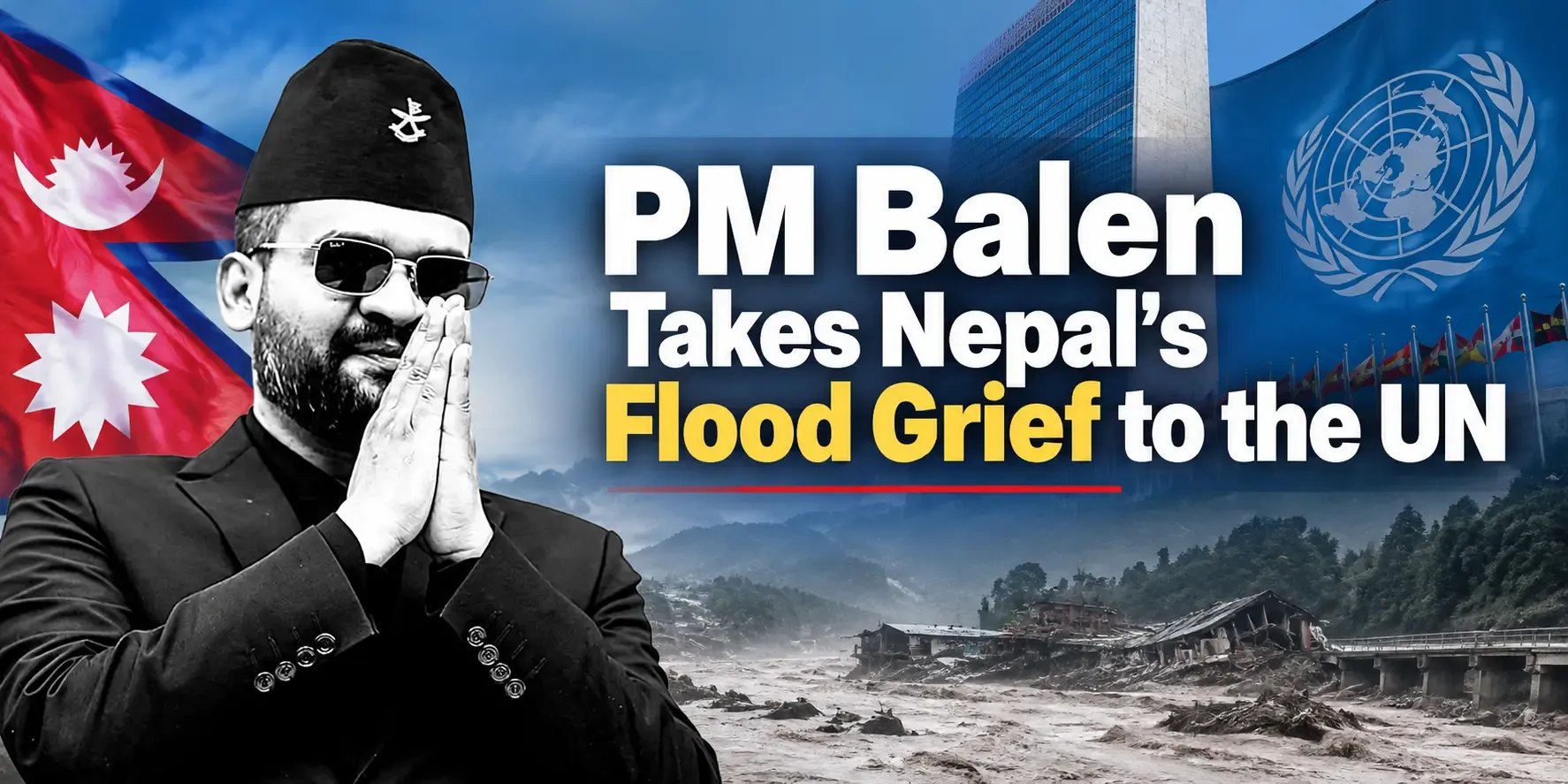
Shah is scheduled to address the UNGA on 24 September, within the general debate window of 22–26 September, according to the UN's official speaking schedule. The Nepali cabinet had originally decided that Foreign Minister Shisir Khanal would lead the delegation, but officials and diplomatic figures in Kathmandu pushed for the Prime Minister himself to go, arguing that no forum offers Nepal a bigger megaphone. Former Nepali ambassador Vijay Kant Karna called it "a very big opportunity" for Nepal, noting that Shah — the youngest prime minister to hold office since the Gen Z-driven movement that brought him to power — already commands unusual international attention. The government has not disguised the calculation: when the head of a country that has just buried well over a thousand of its own citizens stands at the UN podium and asks who will pay, the world listens differently than when a minister does.
The disaster that prompted this trip was triggered by an ice-rock avalanche near the Nepal-Tibet border on 26 August, which sent a wall of water and debris down the Bhote Koshi valley into Rasuwa, Nuwakot, Dhading and Gorkha. Nepal's government has put preliminary damage estimates at $4–7 billion, with recovery costs projected around $5 billion — a staggering bill for a country whose own contribution to global carbon emissions is estimated at roughly 0.01–1%, against more than 46% forest cover. That asymmetry is precisely the argument Nepal intends to press at the UN: officials are preparing to formally seek support from the international loss-and-damage fund, alongside direct climate compensation from the United States, China and India, the countries Kathmandu has explicitly named as having "legal and moral liability" given their historic emissions. India's Ministry of External Affairs has already responded, invoking the principle of "common but differentiated responsibilities" and arguing that developed nations bear the primary duty to finance and transfer technology to vulnerable countries like Nepal — a diplomatic hedge that signals compensation, if it comes at all, will be contested and slow.
This is where the story becomes a UK story, not just a Nepal one. The Bhotekoshi disaster has already been raised inside the UK Parliament: former Nepali Deputy Speaker Indira Rana Magar met UK Deputy Speaker Caroline Nokes at the House of Commons on 7 September specifically to press Britain's support for climate justice, and Lord Popat has separately urged the UK government to do more, on top of the £5 million Prime Minister Andy Burnham has already pledged. Nepali sources indicate the flood has now been raised in the parliaments of India, the United States, Britain and South Korea — meaning Shah's UN address will land in a diplomatic environment where the UK has already signalled sympathy, but not yet committed to anything resembling the structural, loss-and-damage-style compensation Kathmandu is now formally seeking. For the UK's Nepalese community — which has independently raised tens of millions of rupees for flood relief over the past fortnight through dozens of samaj and NRNA UK bodies — Shah's UN appearance is the moment that determines whether that grassroots generosity gets matched by government-to-government money, or whether Britain's involvement stays at the level of parliamentary sympathy and one-off aid. Nepal's ask — upgrading from Least Developed Country status aside — is squarely about the Himalayan region's glacier melt and disaster exposure being treated as a global liability, not a national misfortune, and how the UK positions itself in that debate over the coming weeks is now a direct diaspora concern, not a distant Kathmandu one.


