
Nepal UK
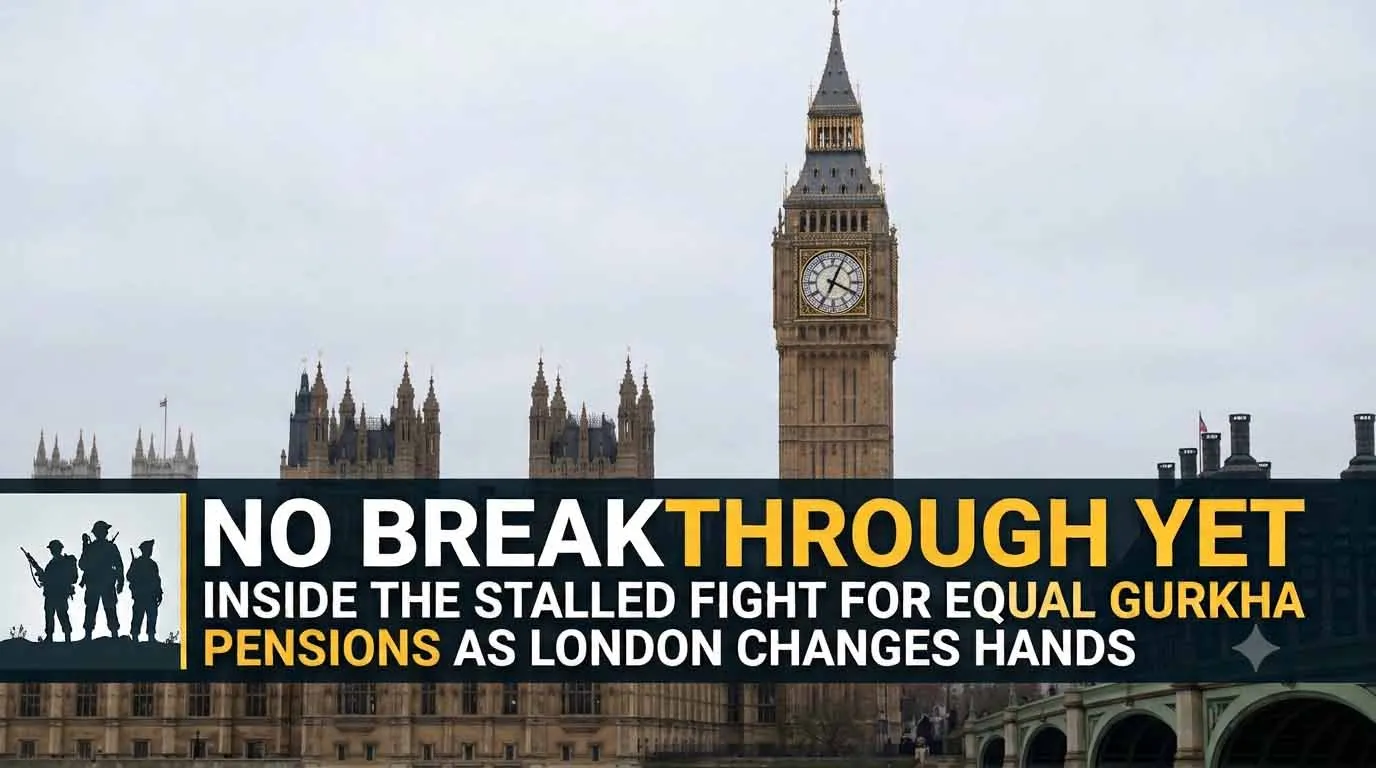
Nepal's Foreign Minister Shisir Khanal held a telephone call with Britain's then-Defence Secretary Dan Jarvis on 14 July 2026, pressing London to resolve decades-old pension inequalities affecting Gurkha veterans who served the British Army before 1993 — just days before the UK itself changed leaders, with Keir Starmer resigning and Andy Burnham becoming prime minister on 20 July. The call came as veterans warned they were prepared to stage a "fast unto death" in Kathmandu if their demands go unmet, raising the stakes for the roughly 200-year-old Nepal-UK military relationship.
The dispute centres on Gurkhas who served between 1948 and 1993, who were placed under a separate legal and pension framework that veterans say denied them parity with British soldiers. At tripartite talks in London on 18 March 2026, veterans' representatives — led by Krishna Bahadur Rai, coordinator of the British Gurkha Satyagraha United Struggle Committee — presented an 11-point charter demanding equal pay and pensions and full implementation of the 1947 Tripartite Agreement. The British side did not concede equal pensions, instead proposing enhanced welfare benefits, which Rai rejected: "Equal pay and pensions are entirely different from welfare benefits." A follow-up ministerial round on 9 June, held at the Nepali Embassy in London and attended by then-Defence Secretary John Healey and Veterans Minister Al Carns, reportedly moved in a "positive direction" on welfare specifics, according to Nepal's Acting Ambassador Bipin Duwadi — but Gurkha Satyagraha coordinator Krishna Bantawa Rai insisted welfare was never the movement's core demand and warned that further delay "could intensify" the campaign and potentially affect future Gurkha recruitment itself.
Nepal's Supreme Court has already directed the government to pursue a "result-oriented" diplomatic push on the issue, and 19 British MPs wrote jointly to the UK government ahead of the March talks urging resolution. A further tripartite round was expected around 21 July — the same week Britain's government changed hands. Jarvis, who had only become Defence Secretary on 12 June, told Khanal he was personally committed to progress "regardless" of the transition and recalled his own ties to Nepal dating to a 1991 visit. Whether that commitment survives under Prime Minister Burnham's reshuffled Cabinet is now an open question that will directly shape how — and whether — nearly 80 years of unresolved pension inequality gets settled.
For the UK's Gurkha veteran community, concentrated in towns like Aldershot and Folkestone, the stakes are not abstract: pension parity affects household income, healthcare access, and how the community's historic service is formally recognised by the state it fought for.


