

Nepal UK
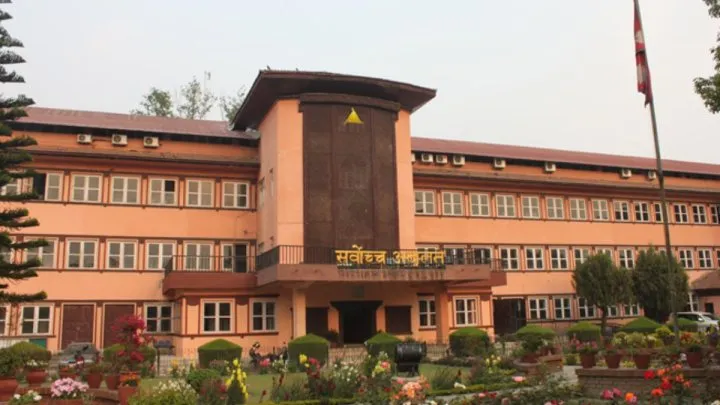
Kathmandu - The Supreme Court has issued an interim order against the government’s decision to recall 11 ambassadors from various countries including the UK.
A joint bench of Justices Saranga Subedi and Shreekanta Poudel passed the order on Sunday halting the implementation of the interim government’s decision to recall ambassadors..
The apex court concluded that the decision could affect Nepal’s relations with the host countries and questioned the necessity and justification behind recalling only 11 ambassadors among those appointed by the previous government.
With the apex court’s interim order, the recalled envoys will not have to return immediately.
A Cabinet meeting on September 16 had decided to recall Nepali envoys to China, Germany, Israel, Qatar, Russia, Saudi Arabia, Spain, Malaysia, the United Kingdom, the United States, and Japan—most of whom were appointed by the KP Sharma Oli administration.
Those recalled include Krishna Prasad Oli (China), Shail Rupakheti (Germany), Dhan Prasad Pandit (Israel), Ramesh Chandra Paudel (Qatar), Jang Bahadur Chauhan (Russia), Naresh Bikram Dhakal (Saudi Arabia), Shanil Nepal (Spain), Dr Netra Prasad Timsina (Malaysia), Chandra Kumar Ghimire (United Kingdom), Lok Darshan Regmi (United States), and Durga Bahadur Subedi (Japan).
Advocates Pratibha Upreti and Ananta Raj Luintel had filed a writ petition demanding the annulment of the government’s decision, arguing that a caretaker government had no constitutional and political mandate to make decisions that could have long-term diplomatic consequences.
President Ramchandra Paudel appointed Sushila Karki as interim prime minister on September 12 with a mandate to conduct parliamentary elections by March 5, 2026.
Petitioners contended that recalling and reappointing ambassadors under such a limited mandate was not only inappropriate but also inconsistent with constitutional norms.


