

Nepal UK
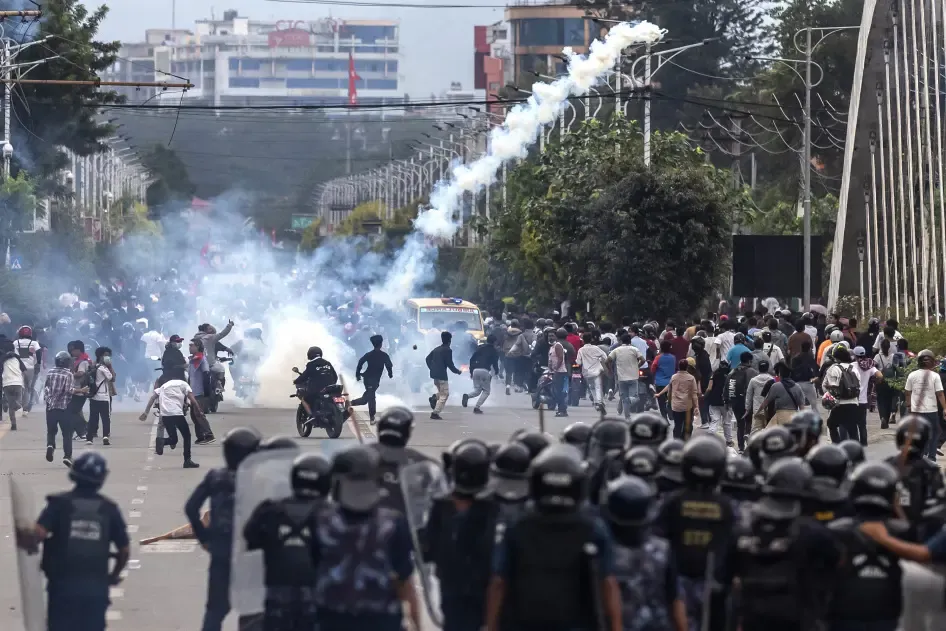
New York - Security forces in Nepal used disproportionate force against youth-led protests on September 8, 2025, Human Rights Watch has said.
The New York-based rights group has called upon the interim government led by former chief justice Sushila Karki to investigate the excessive use of force as well as arson and mob attacks on individuals and
buildings the following day, September 9, including those who may have ordered any unlawful acts.
Human Rights Watch found that police indiscriminately fired on protesters multiple times over three hours, killing seventeen people in Kathmandu who had been demonstrating against corruption in politics and a sweeping social media ban imposed four days earlier in the capital, Kathmandu, on September 8. This sparked a second day of violence on September 9, but security forces appeared to fail to act when groups of people, some apparently not linked to Gen Z protests, set fire to prominent government buildings; assaulted politicians, journalists, and others; and attacked schools, businesses, and media companies.
“The recent violence in Nepal included serious human rights violations, and those responsible should be held accountable, whether they are security forces or political actors,” said Meenakshi Ganguly, deputy Asia director at Human Rights Watch. “The government should ensure that the investigations are independent, time-bound, and transparent, and that no one found responsible for breaking the law is unfairly protected from proper prosecution.”
The Karki government has created a judicial commission of inquiry tasked with investigating the deaths of at least 76 people killed in two days of violence across the country, around 47 of them in Kathmandu, including 3 policemen. The Karki government should recognize and address corruption and the failure to ensure rights, such as an adequate standard of living, which spurred the youth protests, Human Rights Watch said.
Human Rights Watch interviewed 52 witnesses, victims, journalists, medical professionals, politicians, and sources close to the security forces; verified photographs and videos posted to social media or shared with researchers; and visited hospitals and the scenes of protests and arson attacks. The research focused on Kathmandu.
The commission created to investigate the events of September 8 and 9 should examine the role of security forces, credible allegations of infiltration, and criminal acts contributing to violence, Human Rights Watch said. “The authorities should recognize that widespread impunity for human rights violations in the past helped enable the violence that occurred this time in Nepal,” Ganguly said. “It is crucial to reverse the decades-long tendency by successive governments in Nepal to bury investigations and stall prosecutions, and to bring about accountability and security sector reform.”


