

Nepal UK
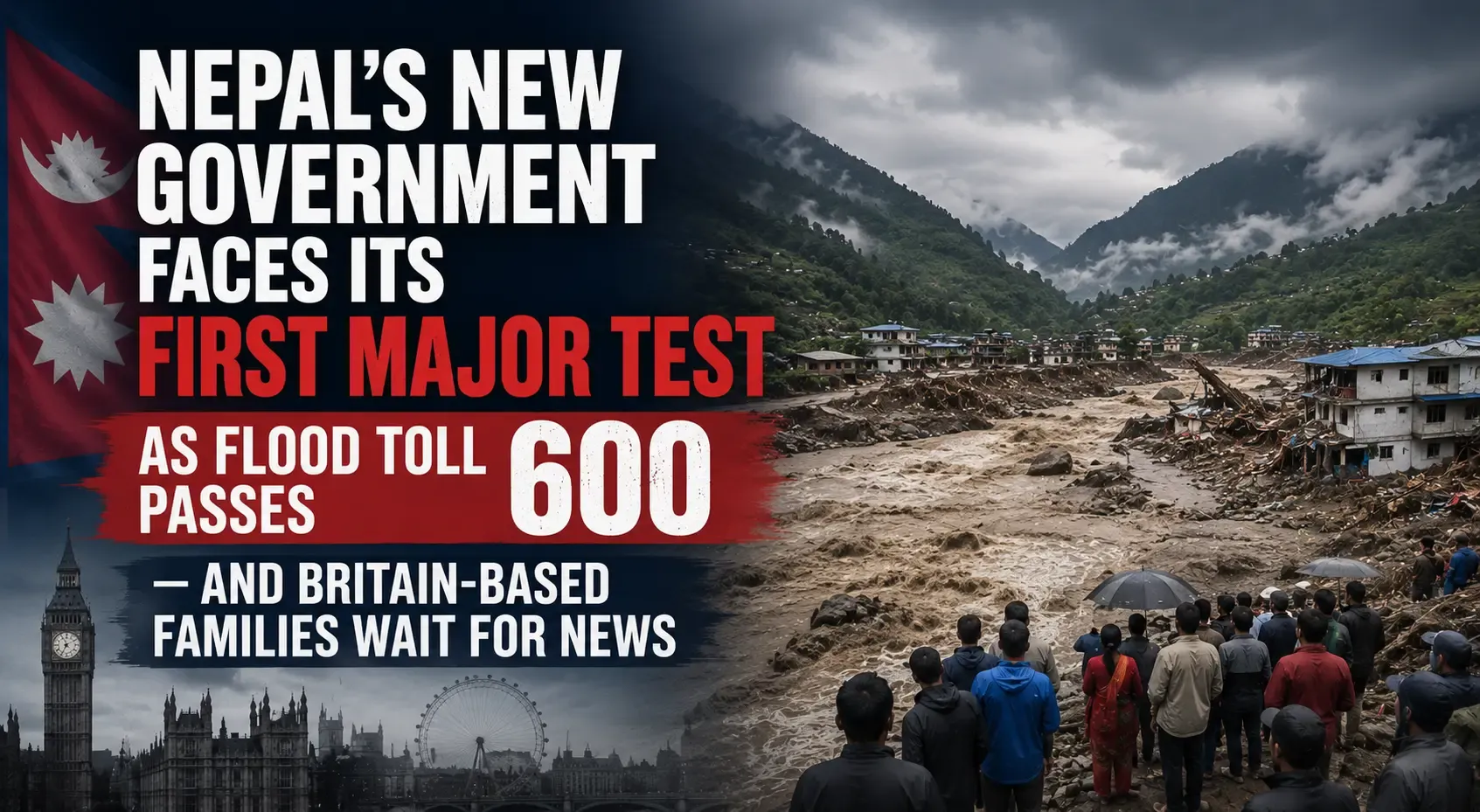
Barely five months into office, Nepal's 36-year-old Prime Minister Balendra "Balen" Shah — installed after the March 2026 snap election that followed last year's Gen Z uprising — is facing the most serious governance test of his young premiership. A glacier collapse above the Bhotekoshi river on 26 August sent a wall of water and debris through Rasuwa, Nuwakot and Dhading districts, destroying the Miteri Bridge, hydropower plants and stretches of the Araniko Highway. As of 29 August, Nepali authorities have confirmed over 600 deaths with roughly 3,000 people still missing across the Nepal-Tibet border area, among them Nepali migrant workers, Indian and Chinese labourers, and dozens of Western tourists — a toll that includes an unconfirmed number of UK-based Nepalis who were visiting family in the affected districts, according to community reports circulating on diaspora Facebook groups and WhatsApp networks this week.
This is the second major disaster to strike this exact stretch of river in just over a year, after a 2025 flood already damaged the Rasuwagadhi dry port and nearby hydropower infrastructure — reviving criticism that Nepal still lacks a standing, real-time data-sharing arrangement with China for monitoring glacial lake and glacier hazards along the shared border. PM Shah has ordered district officials to relocate residents from low-lying river corridors and says the state machinery has been mobilised at "full capacity," but relief agencies including UNICEF and Direct Relief report that rescue teams are struggling to reach remote areas cut off by destroyed roads, and that authorities are now planning mass burials for unidentifiable remains as bodies decompose faster than they can be processed. For the UK diaspora specifically, the disaster is not an abstract homeland tragedy: it is a live crisis affecting relatives, ancestral villages and remittance-dependent households that many UK-based Nepali families support financially. The scale of destruction — estimated by early reporting at over 200 billion rupees in lost infrastructure, roads and hydropower assets — will also test Nepal's reconstruction capacity at a moment when the new government has little fiscal buffer and no coalition partners to share the political cost if the response falters.
The unresolved policy question likely to dominate Kathmandu's press in the coming weeks is transboundary early-warning cooperation with China/Tibet: satellite imagery cited by the US Geological Survey points to a large glacier/ice collapse as the trigger, a hazard type Nepal's disaster agencies are not yet equipped to forecast. Expect NRNA UK and Gurkha welfare organisations to press the UK government, which has already pledged £5 million, on whether aid will fund longer-term early-warning infrastructure rather than only emergency relief.


