

Nepal UK
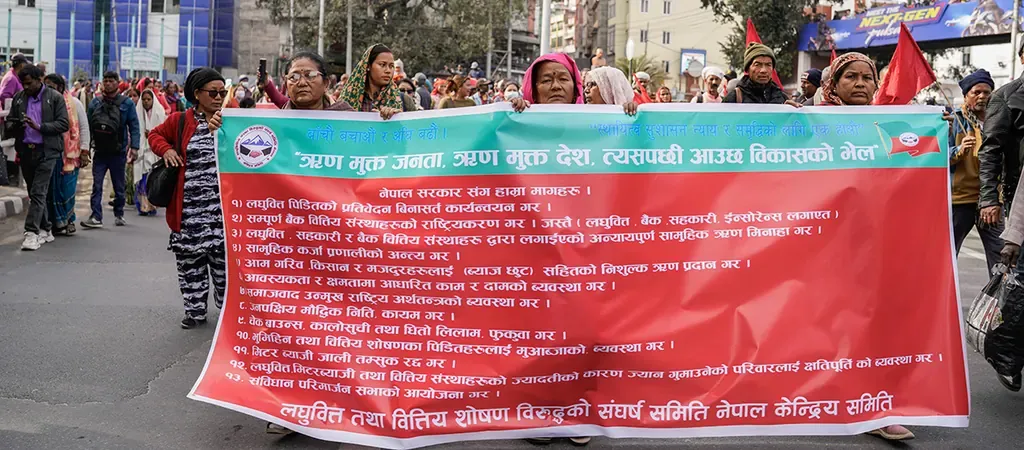
Photo: Gorkhapatra Online
About 21,500 small borrowers were blacklisted in the last fiscal year, up from 710 three years earlier. Regulators and lenders now disagree about who is to blame.
Nepal's credit blacklist now holds roughly 170,000 people, and small borrowers account for a fast-growing share, the Kathmandu Post reported on 30 September. About 21,500 small borrowers were blacklisted in fiscal 2025/26 alone, roughly 36% of that year's additions, according to the Post's analysis of Credit Information Centre data. For households in Nepal who depend on remittances and informal credit, and for diaspora investors and relatives, the story points to stress in the lowest tier of the financial system.
The numbers The Post gives yearly blacklisting of small borrowers as 710 (2022/23), 3,600 (2023/24), 5,800 (2024/25) and about 21,500 (2025/26). (The article itself uses 21,500 and 21,600 in different places; NepalUK uses "about 21,500".) Microfinance borrowers number 31,797 on the list, around 18% of the total. Non-performing loans averaged 10.42% by mid-July 2026, up from under 3% before 2022; one institution, Matribhumi Microfinance, reached 26%. The number of operating microfinance institutions has fallen from 91 in December 2019 to 52.
Competing explanations Nepal Rastra Bank spokesperson Guru Prasad Poudel conceded: "We were late on this. Had we done it on time, this problem might not have emerged." He noted that the central bank only required lenders to check the Credit Information Centre from fiscal 2017/18. Former Governor Dipendra Bahadur Chhetri said the situation could have been contained with better regulation.
Lenders point elsewhere. Ram Bahadur Yadav, president of the Microfinance Bankers' Association, accepted that lending expanded as competition intensified, but said borrowers able to repay were refusing to, influenced by campaigns wrongly claiming loans need not be repaid. Former NRB executive director Prakash Kumar Shrestha said institutions pushed lending to meet targets without selecting borrowers properly. The Post also reports multiple-borrowing cases, including one borrower with loans from 47 institutions, and notes a 2022 central-bank limit on borrowing from several lenders that disrupted cash flow for some small businesses.
What it means This is a story of overlapping failures rather than a single culprit: weak early regulation, aggressive lending, income shocks from COVID-19, and some borrower resistance. The human cost, as the Post describes it, includes harassment and asset seizure, though those accounts come from individual borrowers and were not independently verified.
What remains uncertain It is not clear how many blacklisted borrowers are repaying, what remedies the central bank is considering, or how the recent floods will affect repayment. No new NRB policy response was found.


