

Nepal UK
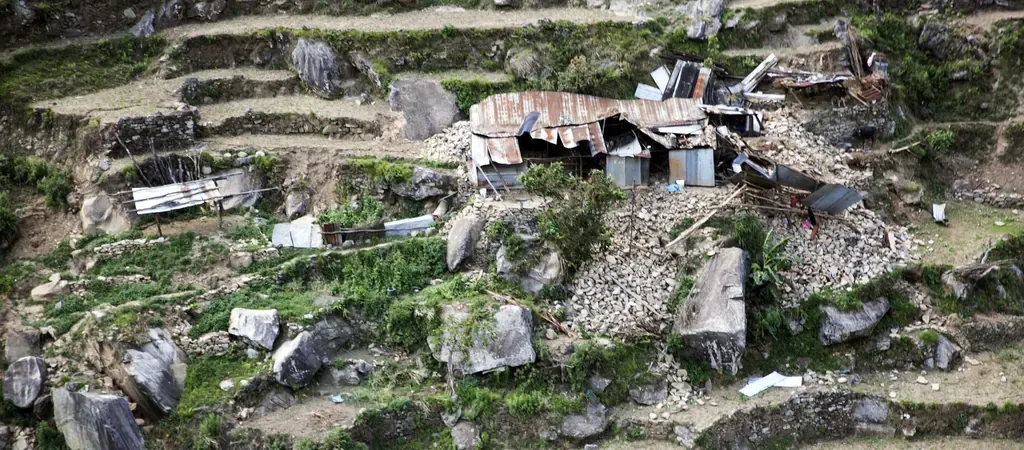
Photo: Lance Cpl. Mandaline Hatch / U.S. Marine Corps.
Nepal's cabinet has approved a mandate agreement for a World Bank-backed earthquake catastrophe bond. If completed, it would give a country that lost about a third of its economic output in 2015 a way to receive cash within weeks of the next major quake.
Nepal's Council of Ministers approved on Friday 9 October the signing of a mandate agreement with the World Bank for a "Nepal Earthquake Catastrophe Bond", Sharesansar reports. The decision is a step, not a finished deal: Artemis, the specialist catastrophe-bond news service, notes that approval "does not guarantee that the transaction will be issued."
A catastrophe bond is a security sold to investors. If a defined disaster occurs, investors lose some or all of their money, which goes to the issuer; if not, they are repaid with interest. A parametric bond pays out on measurable physical triggers, such as earthquake magnitude or ground shaking, rather than on assessed losses, which allows quick payment.
Artemis reported in July 2026 that the World Bank had started work on the project, describing it as at a "nascent stage" and relying on what the publication had been told, so terms are not final. According to that report, the bond would be:
Artemis says the bond would be the first covering Nepal and a rare one for South Asia. It also records that the 2015 earthquake's damage was around one-third of Nepal's GDP. The trigger design, coverage amounts and premium are still to be worked out, according to Artemis's October report.
The timing sharpens the policy question. Nepal is financing recovery from the 26 August Nepal–Tibet flood, which killed more than 1,400 people, and the government estimates rebuilding at about US$4.77 billion, according to the Associated Press. That disaster was caused by a glacier collapse and would not trigger an earthquake bond, but it has exposed how thin Nepal's emergency finances are.
This is NepalUK's analysis: a parametric payout cannot replace reconstruction budgets, early-warning systems or building enforcement. At best it supplies fast liquidity in the first weeks, when governments are otherwise reliant on donor pledges and reallocated budgets.
Opportunity: speed and predictability, and a market signal that Nepal's risk is insurable. A completed deal could open the way for cover against other perils.
Risks: the cost. A US$20 million project cost is large against a US$80–190 million cover, and premiums could be funded from budgets that also have to pay for roads and schools. There is also basis risk: a damaging quake might fall below the trigger and pay nothing, or an event might pay out when losses are modest. Public detail on the agreement is limited, and neither the Ministry of Finance nor the World Bank has published terms in the sources NepalUK reviewed.
Remittances from workers and the diaspora are a pillar of Nepal's economy, and a major earthquake would directly affect families in the Kathmandu Valley and beyond. For professionals in London's insurance and reinsurance sector — which participates in global catastrophe-risk markets — this is a notable first, and a possible niche for Nepalese expertise in risk modelling and finance. That market observation is editorial context rather than a reported claim from the sources.


