

Nepal UK
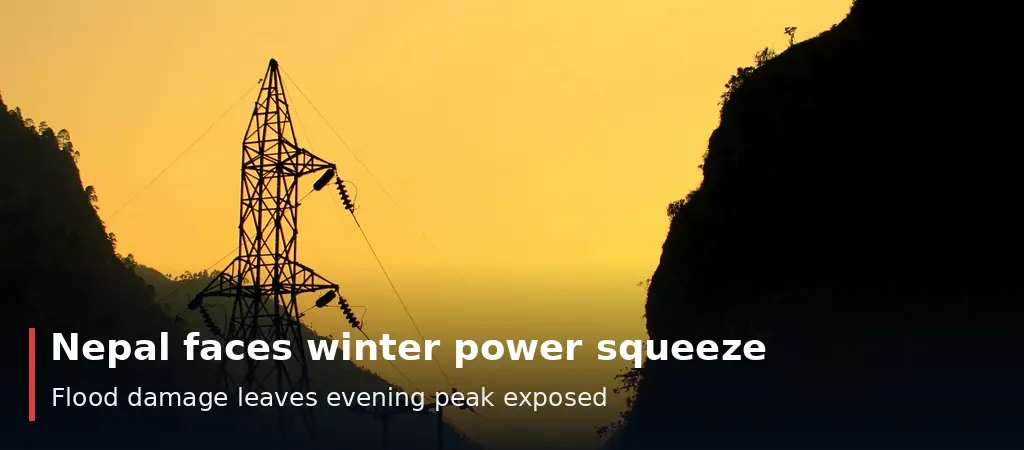
Nepal, which has spent recent years exporting surplus hydropower, is heading into winter with damaged generation and transmission, a limited import permit from India and no supply on offer during its busiest evening hours.
The picture comes from official figures reported in September and from an analysis published today. The central official fact is that India's Ministry of Power approved imports of up to 654 MW, from midnight to 6pm, until 31 December. Up to 600 MW can flow through the 400 kV Muzaffarpur–Dhalkebar line and up to 54 MW through the 132 kV Tanakpur–Mahendranagar line. Nothing is available between 6pm and midnight, when Nepali demand peaks.
When the approval was reported on 15 September, an NEA spokesperson, Rajan Dhakal, said Nepal was generating enough to meet domestic demand and export the surplus, then about 800 MW a day to India. He said the import capacity might not be needed in large volumes immediately but could act as a back-up. At that point, flood damage had shut 12 hydropower projects with a combined 431 MW. A 40 MW export to Bangladesh through India had been suspended.
An analysis published today by an India-based researcher gives a harder winter outlook. Its main claims are that landslides on 27 September damaged the 220 kV Kaligandaki corridor and shut 12 plants totalling 358.2 MW, that the flood destroyed the 220 kV Trishuli-3B hub substation, and that winter peak demand is expected to be about 2,300 MW against domestic winter output of about 1,218 MW. The author says the NEA plans to import 1,154 MW, well above the 654 MW currently approved, and that India will review January quantities in December. The author also reports that the NEA's managing director has ruled out load-shedding this winter.
These figures have not been matched to an NEA publication. They should be read as one analyst's account until the NEA or the energy ministry releases its own winter plan. The 12-plant figures also differ between September (431 MW) and today's analysis (358.2 MW). They relate to different events, but the totals are not directly comparable.
Most of Nepal's system relies on river flow, which falls in the dry season. The analysis argues that this makes evening supply the weak point, because solar and run-of-river output cannot be shifted into the evening hours without storage. The author notes the 106 MW Kulekhani storage cascade was run around the clock after the flood, which could reduce winter reserves, a point attributed to an anonymous plant official. The author also says home electric-vehicle charging adds to evening demand: Nepal had 63,280 registered EVs by the end of fiscal year 2025/26.
The government estimates that restoring energy and grid systems will cost about Rs 390.62 billion, according to the same analysis. That figure is not confirmed in the official sources reviewed.
For households, the main uncertainty is evening supply in Kathmandu and the Tarai. For businesses, the author says the NEA reduced supply to factories by about 300 MW during the recent shortfall, which suggests industrial users are the first to be affected. For Nepalese families overseas who are financing new homes or businesses, reliability matters for any venture that depends on power, such as small manufacturing or cold storage. The Finance Ministry has separately warned that the flood will severely affect revenue and growth this fiscal year.
Two dates will show how serious the position is: the NEA's published winter plan, if any, and India's decision on January import quantities, expected in December. No NEA response to the figures in today's analysis had been published at the time of writing.


