

Nepal UK
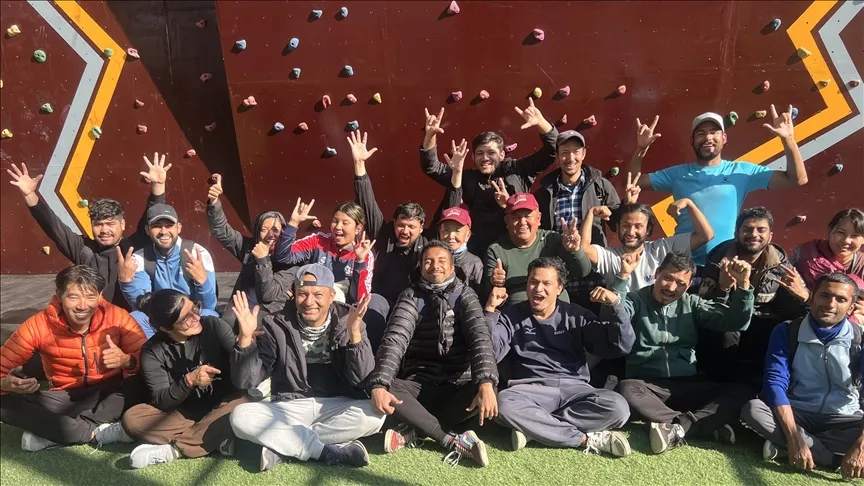
Photo source – NATHM
Kathmandu – For the first time in Nepal’s tourism history, Nepal Academy of Tourism and Hotel Management (NATHM), in partnership with the Nepal Tourism Board, has launched a formal trekking-guide course exclusively for deaf trainees.
Twenty-five deaf participants — four women and 21 men — completed intensive training covering mountain safety, logistics, Nepal’s culture and history, geography, and wildlife. Instructors included veteran mountaineers, rescue specialists and medical professionals. Practical lessons involved first aid, gear handling, route planning, insurance, and client care.
Guiding as a deaf trekking leader requires specialised communication: visual cues, adapted hand signals for distance, pre-agreed gestures for emergencies and heightened environmental awareness. Without auditory warnings of falling rocks, sudden weather changes or wildlife, deaf trekkers rely more on vibration, shadows and team coordination, Anadolou Agency reported.
“I’m now fully confident that I can guide in any trekking area, from Muktinath to Annapurna Base Camp,” said 29-year-old trainee Riha Maharjan through sign language. She hopes to take her foreign friends to routes such as Annapurna and Manaslu and plans to open a tourism business in Kathmandu. Maharjan, who is pursuing a master’s degree in business studies, was also among the top 10 finalists in Miss Deaf Universe 2024.
Breaking barriers in the mountains
Some trainees had already worked informally on trekking routes, but without certification they were barred from key regions, including the Everest area.
“I had reached all major tourist destinations, but since porters from outside districts aren’t allowed in the Everest region, I couldn’t go there,” said newly certified guide Chop Prasad Poudel. “Now, I can go as a trekking guide.”
Poudel said deaf guides often faced bias from hearing colleagues who doubted their abilities. “Now, it’s our turn to shine,” he said.
Another trainee, 28-year-old Raj Bahadur Budha, climbed a 15-metre wall during training and raised his fists in triumph. “I have a dream to climb Mt Everest,” he said through an interpreter, noting that he had already guided deaf and other foreign trekkers informally.
“After this training, I’m eyeing big mountains. If many foreigners can do it, I can too.”
Expanding inclusion in Himalayan tourism
Despite attracting over a million trekkers annually and hosting eight of the world’s 14 tallest peaks, Nepal’s tourism sector has rarely catered to deaf or hard-of-hearing travellers.
NATHM and the UN Development Programme hope this pioneering training will be replicated across South Asia, tapping into a global community of 430 million people with disabling hearing loss, according to the World Health Organization.
Ajaya Kumar Dhakal, principal of NATHM, said they are working to connect deaf guides with trekking agencies. “If our deaf guides can bring even a small portion of deaf tourists to Nepal, that will be a huge contribution,” he said.
With more than 300,000 people living with hearing loss in Nepal, officials believe the initiative will not only expand employment opportunities but also give deaf travellers a level of comfort and cultural understanding they rarely experience.
Trainer Lhakpa Sherpa said the first batch of trainees stood out for their energy and dedication. “They were more interested and active than ordinary trekking guides,” he said. “I’m sure they will rise quickly in this field.”


