
Nepal UK
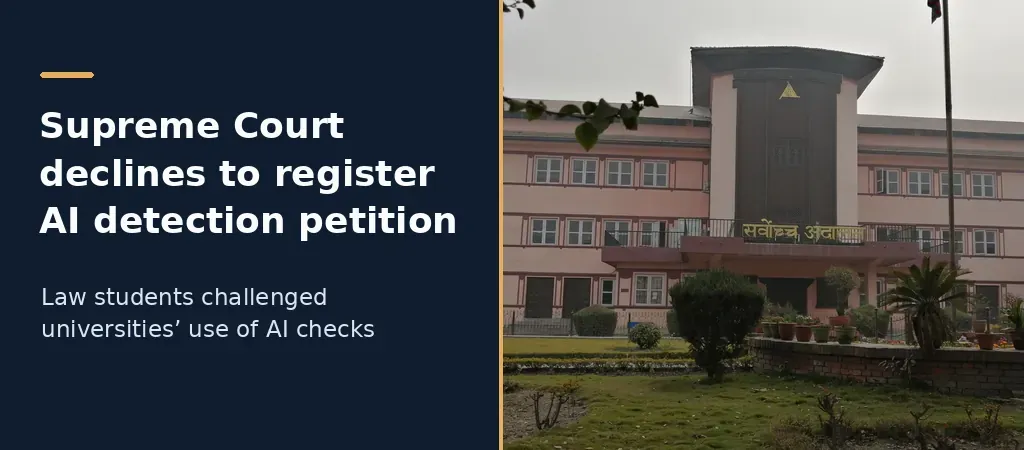
Nepal's Supreme Court administration has refused to register a writ petition that sought to stop universities using software to flag AI-generated text in students' work, leaving one of the first legal tests of artificial intelligence in Nepali higher education without a hearing.
The petition, filed by law students including Roshan Auji and Bibek Chaudhary and reported on Sunday 22 November, argued that Tribhuvan University, Nepal Law Campus and other institutions were rejecting theses, research papers and seminar submissions on the basis of foreign-made detection tools that produce speculative results. The students said genuine work was being marked as likely AI-written, forcing repeated rewrites, and that uploading their work to overseas servers breached the Privacy Act, 2018. They asked for a moratorium until the government adopts an AI policy and for an expert committee to study the issue.
In an order issued by Registrar Baburam Dahal, the court administration said the petitioners had not identified which of their fundamental or legal rights had been violated, so the case could not be registered as a public-interest matter.
The refusal is procedural, not a ruling on the merits. Tribhuvan University continues to apply its Anti-Plagiarism Software Management and Operation Regulation, 2023, which includes AI-detection tests. Nepal still has no dedicated AI law. Students may refile with a narrower claim, and the debate over fairness, accuracy and data protection in AI detection — familiar to universities worldwide — is unlikely to end here.


