
Nepal UK
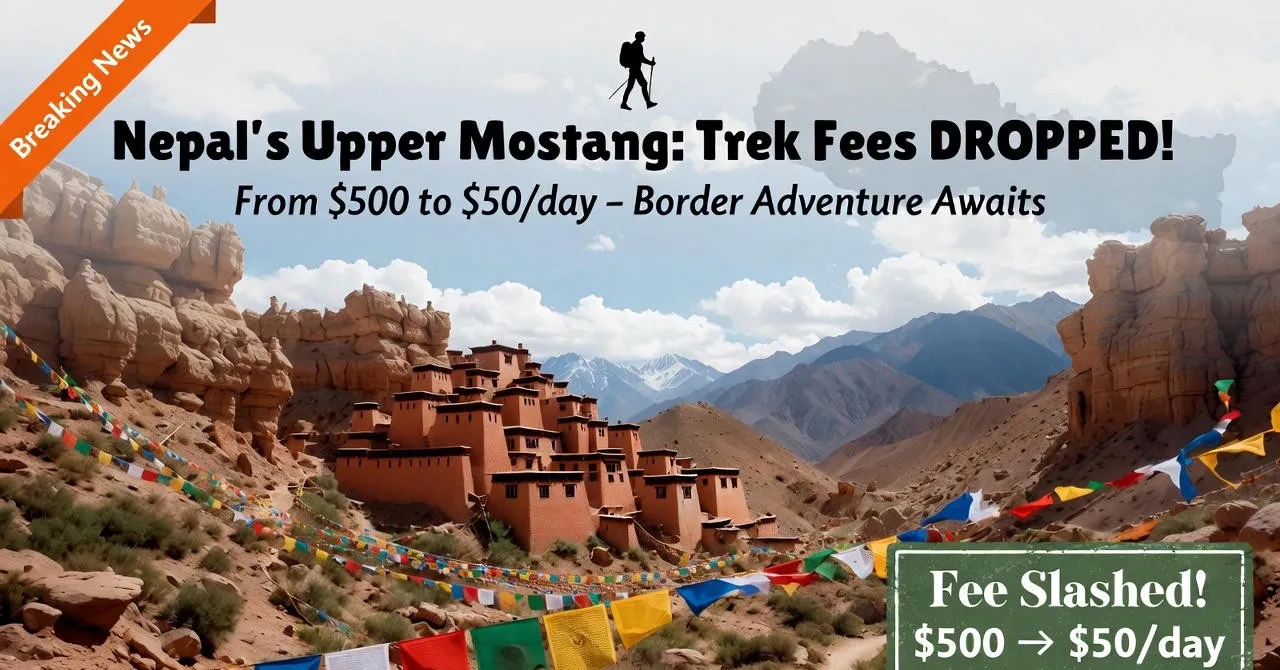
Kathmandu - The Nepal government has decided to reduce the $500 per person per 10-day period fee for foreign trekkers visiting the Upper Mustang region to $50 per person per day, officials said.
Upper Mustang region near Korala on the Nepal-China border, was considered a restricted area.
Minister for Communications and Information Technology Jagadish Kharel,who is also the government spokesperson, informed reporters on Tuesday regarding the cabinet’s decision.
He said that changes will be made by amending the Immigration Regulations.
Chinese authorities haven’t commented as yet regarding Nepal government’s decision.
China has remained sensitive regarding travel by foreigners to the region bordering Tibet.
The Trekking Agencies Association of Nepal welcomed the decision, saying it had been requesting the government to ease the restrictions.
Meanwhile, TAAN also urged the government to remove the provision that requires permit holders to be in groups of more than two people.
“Our demand, however, doesn’t mean that foreign trekkers should be allowed to wander freely in restricted areas. They will be accompanied by a guide, which is mandatory in all trekking areas except Everest.”
Taplejung, Sankhuwasabha, Solukhumbu, Dolakha, Rasuwa, Gorkha, upper Mustang, Manang, upper Dolpa, lower Dolpa, Mugu, Humla, Bajhang and Darchula districts that border Tibet were declared out of bounds for foreign visitors in the 1970s.
Foreigners are required to obtain special permits from the Department of Immigration to travel to these areas. Also, permits are not issued to individual trekkers. Only those travelling in a group through a government-authorised trekking agency can apply for such permits.
Permit fees range from $10 a week to $500 for 10 days, depending on the area.
In the 1970s, the government restricted the movement of foreigners in several northern villages bordering Tibet, as Tibetan Khampa rebels who opposed Chinese rule were found to be using the Nepali territory to mount raids into China. In 1974, the Nepali Army succeeded in completely disarming the rebels, but the travel restrictions stayed.
In 2024, a total of 1.14 million tourists visited Nepal, officials said.
According to the Department of Immigration, nearly 29,000 foreign trekkers travelled to restricted areas including Manaslu and Upper Mustang.


