
Nepal UK
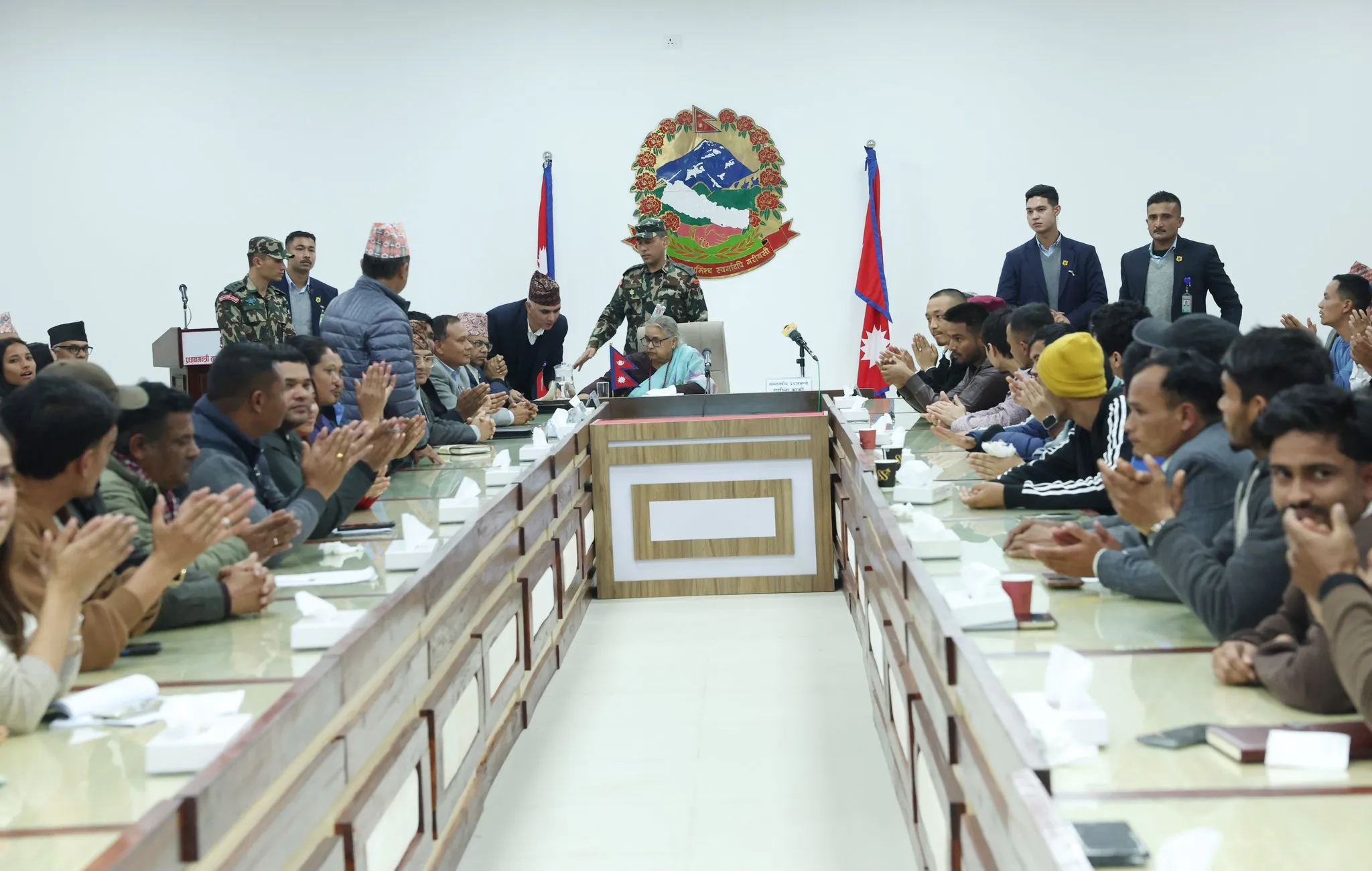
Kathmandu – Prime Minister of Nepal’s interim government, Mrs Sushila Karki, has signed a 10-point accord with representatives of various Gen Z groups to address their various demands.
Prime Minister Karki and Bhoj Bikram Thapa, on behalf of those who attained martyrdom and were injured during the Gen Z movement, signed the pact at Singha Durbar on Wednesday
The agreement emphasises the formation of a commission to recommend changes in the constitution, reforms in the electoral system as well as in the judiciary and public administration, justice for the victims of the Gen Z movement, and issue of corruption control, among others.
The agreement recognises the September Gen Z movement as a ‘People’s Movement’ (‘Jana andolan’).
The agreement states that the nature of the current interim government is non-partisan, one that was born out of extraordinary circumstances.
The two sides have also agreed to broaden the mandate of the Gauri Bahadur Karki-led commission investigating the scenario, officials and individuals responsible for the dozens of deaths and widespread destruction of public and private property during the September 8–9 uprising this year.
“We want youths to lead this country,” Prime Minister Sushila Karki said at the signing ceremony.
“Nepal has become a leading country for Gen Z movements. Other countries are following in our footsteps,” she said. “We tried our best to make this document exemplary so that other countries can translate and follow it.”
The agreement also seeks the release of individuals arrested by police for being involved in the Gen Z movement. Police have arrested individuals accused of involvement in the looting, vandalism, and arson of government, private and public property, as well as the murder of police and security personnel. The agreement says the arrested individuals must be immediately released.
The agreement also stipulates that a high-level task force will be formed immediately to address the urgent and long-term needs of the families of those martyred and injured in the Gen Z movement, in consultation and coordination with the respective families and injured individuals. It further mentions ensuring comprehensive reparations, including interim relief, compensation, free health treatment, free education, employment, social security, and meaningful commemoration of the injured and the families of the deceased.
“A separate mechanism shall be formed to investigate the unjust and unlawful use of force by security agencies during various movements in Nepal, including the Gen Z movement, and to prevent the recurrence of such incidents. This mechanism will identify the causes, including Nepal’s prevailing laws, weaknesses within the security agencies, the lack of social and mental security for security personnel, and other factors,” the agreement says.
The mechanism will study and recommend necessary institutional reforms of the relevant laws and security agencies, and will submit its report within 90 days. The report will be made public, and the recommendations contained within it shall be implemented immediately, as per the agreement.
The agreement also talks about anti-corruption and institutional reforms, and an end to political and policy-level corruption and appointments based on political party quotas and partisan division in public institutions.
The agreement also calls for holding free, fair and peaceful elections on March 5 and to introduce legal provisions on reforming the electoral process.
The agreement proposes reforming the structure and appointment process of officials in the Judiciary, Constitutional Council, constitutional commissions, and Judicial Council—as provisioned by the Constitution of Nepal—to free them from political and partisan interference, enable them to function autonomously and independently, and ensure youth representation.
The agreement outlines various options for electoral reforms, including the provision for ‘NOTA’ (None of the Above), which is currently not in practice in Nepal.


