

Nepal UK
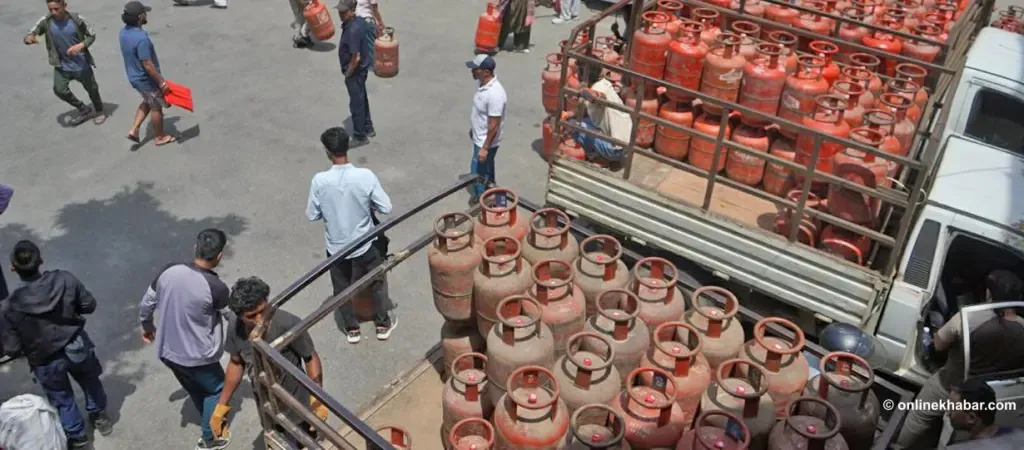
Nepal's state oil monopoly says it will hold petrol, diesel and LPG prices through the festival season even as global costs rise. The decision protects households now, but the corporation's own figures show a gap that a stabilisation fund cannot fully cover.
Nepal Oil Corporation (NOC) projects a net loss of Rs 7.5 billion between mid-July and mid-October 2026, according to figures reported by Onlinekhabar on 2 October. The corporation says it will keep fuel prices unchanged through the festival season, with Dashain beginning on 11 October, by drawing on a Rs 4.7 billion Price Stabilisation Fund.
NOC spokesperson Manoj Thakur said the corporation currently loses Rs 493 on every LPG cylinder sold, Rs 26.50 on each litre of petrol and Rs 48.50 on each litre of diesel, as reported by Onlinekhabar. The corporation attributes the losses to rising global fuel prices and its inability to apply automatic domestic price adjustments.
Onlinekhabar's breakdown shows the loss accumulating over the quarter, with a further Rs 3.2 billion projected for 2 to 16 October. We have reported these figures as published and have not been able to reconcile the period-by-period breakdown independently against NOC's own statement.
Simple arithmetic on the reported totals shows the scale of the problem: a projected Rs 7.5 billion loss against a Rs 4.7 billion fund leaves roughly Rs 2.8 billion unaccounted for. That is NepalUK's calculation, not an NOC statement, and it assumes the fund is applied in full to this quarter's loss.
On 16 September, Indian Oil Corporation raised its petrol price to NOC by Rs 12.40 a litre and diesel by Rs 4.68, according to Sharesansar. NOC left retail prices at Rs 197.50 to Rs 200 a litre, depending on location, citing "the difficult circumstances created by the recent floods in the Bhote Koshi River" and saying it had chosen to absorb the cost. It estimated a loss of about Rs 1.92 billion over 15 days at that point.
LPG imports have also risen. July alone saw 4.036 million cylinders imported, about 900,000 more than a year earlier, Onlinekhabar reports.
Dashain is the peak period for household spending and for travel to home villages. Holding fuel prices avoids a cost shock at the moment families, including those supported by remittances from the UK and elsewhere, are spending most. Nepalese readers abroad sending festival money home should note that the price freeze is a temporary buffer rather than a lower cost base.
Holding prices protects consumers and limits inflation risk, but unfunded losses at a state corporation can eventually shift to public finances, supply credit or delayed payments to suppliers. We have not found a published response from the Ministry of Industry, Commerce and Supplies or the Ministry of Finance on how any shortfall would be financed. NOC has not said when it expects to resume price adjustments.
Whether prices change after the festival, whether the government approves a pricing formula or subsidy, and whether global prices ease. This article will be updated if NOC or the government announces a decision.


