

Nepal UK
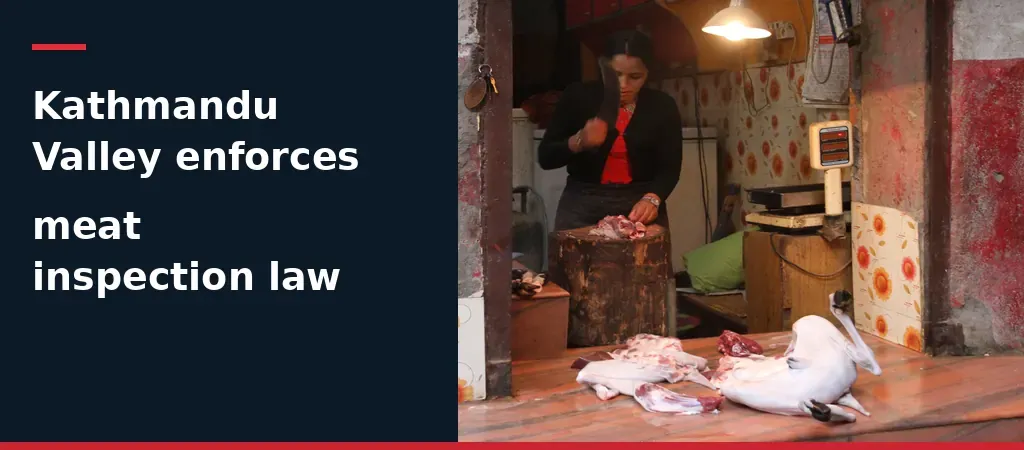
A law passed in 1999 but never systematically applied came into force across all 21 local units of Kathmandu, Lalitpur and Bhaktapur on Tuesday 17 November. The Animal Slaughterhouse and Meat Inspection Act requires animals and birds to pass a health check before slaughter, and meat to be inspected and officially stamped before it can be sold. Slaughterhouses and meat shops now need licences. Mixing meat from different animals, adding substances to bulk up weight and selling meat from sick or dead animals are prohibited. Offenders face fines of Rs5,000 to Rs20,000, one to three months' imprisonment, or both.
The rollout is narrower than first planned. According to the Department of Livestock Services, stamping began at only three established slaughterhouses, one in each district, because legal and procedural steps delayed the designation of slaughter sites in every municipality. The department says 240 inspectors have been trained, 12 task forces are in place, and Bagmati Province is preparing to appoint 23 supervisors once its cabinet approves them. Its target is stamped meat in every Valley shop within five to six months.
The law extends to all other municipalities from 15 January 2027 and to rural municipalities from 17 July 2027, according to the government's Gazette notice. Officials have said small retailers will not be forced to close, but enforcement against roadside slaughter will tighten. For residents, and for overseas families sending money home for festival feasts, the measure is a significant food-safety change; whether it sticks depends on local governments, whose limited resources were blamed for past failures.


