

Nepal UK
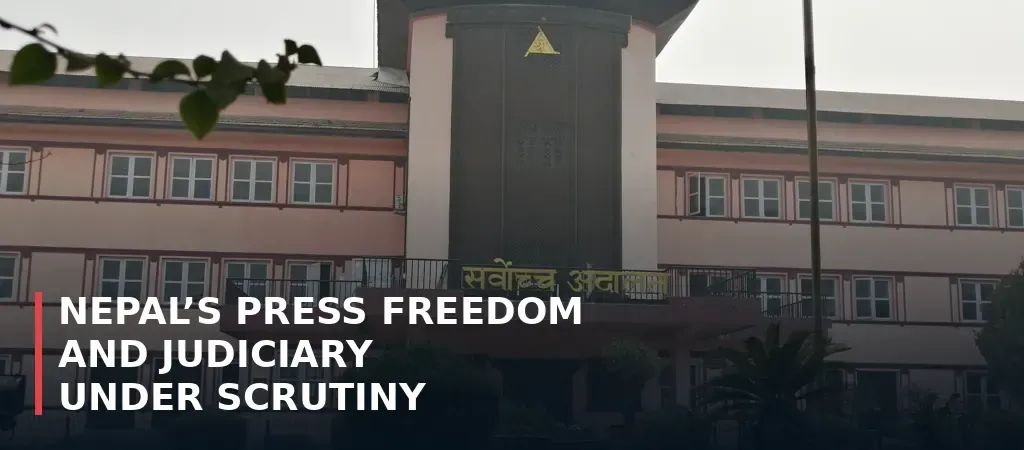
Nepal's government is facing questions about both press freedom and judicial integrity after police picked up journalists who reported on messages allegedly exchanged between a detained intermediary and a Supreme Court justice. The Supreme Court's full court said on Monday 2 November that the allegations should be investigated under the constitution and the law, while ministers have said all the journalists have been released.
What is known
The central figure is Inam Sapkota, a 31-year-old with no formal government post who was stopped at Tribhuvan International Airport as he prepared to board a flight to Delhi at the end of September. He is in custody. The Kathmandu Post reports that an initial allegation of indecent behaviour widened into an inquiry covering foreign exchange, banking offences and money laundering. These are allegations; Mr Sapkota has not been convicted of any offence, and his response to them has not been published.
On Friday 30 October, plainclothes officers visited the newsrooms of Nepal Press, Naya Patrika and Diyo Post after Naya Patrika and Diyo Post published leaked WhatsApp exchanges said to be between Mr Sapkota and Justice Hari Prasad Phuyal. Nepal Press's editor-in-chief, Matrika Poudel, said officers removed reporter Bishwamani Subedi without presenting a warrant or giving a reason beyond needing a discussion. Naya Patrika's news editor, Khagendra Pant, said officers who identified themselves as members of the Metropolitan Crime Division sought reporter Navaraj Mainali. Police Cyber Bureau Superintendent Deepak Awasthi confirmed that Mr Subedi and others were brought in for questioning but gave no detail on the grounds.
Communications Minister Bikram Timilsina later said all detained journalists had been released and that the government was committed to press freedom. Press Council Nepal described detention without clear grounds or a warrant as a serious threat to press freedom and urged authorities to use the Council's complaints mechanism instead of police action.
What is alleged, and what is denied
The reports suggest the messages concern a pending court case. Justice Phuyal has acknowledged meeting Mr Sapkota but denies any dealings or agreement to influence proceedings. Chief Justice Manoj Kumar Sharma has been named in reports of financial links; he denies any direct or indirect contact. The Kathmandu Post notes that the reported messages show contact about a pending case but do not by themselves prove that any influence was exercised, and that transactions mentioned in material said to come from Mr Sapkota's phone have not been independently established as bribes.
Other claims are more serious still and remain unproven. Reporting cites anonymous police sources alleging political pressure behind the September detention of former chief justice Cholendra Shumsher Rana, who police said was brought in for security reasons rather than arrested and who was released the next day. Another senior security officer was dismissed for allegedly disclosing sensitive information. The Prime Minister's Office has said Mr Sapkota misused the prime minister's name. A US Embassy link, floated initially by one police official, was denied by the embassy.
Why it matters
Two questions are now entangled. The first is whether judges were approached improperly, a matter for the courts, police and, potentially, parliament. The second is whether the state's response to reporting on that question was proportionate. The ruling Rastriya Swatantra Party, which came to power promising reform, has condemned the journalist detentions but is reportedly divided over any move to impeach judges. The Prime Minister's Office has distanced itself from the detentions, although police said the action followed concerns raised by the office. Those accounts have not been reconciled publicly.
For Nepalese readers abroad, the case bears on two things the diaspora watches closely: confidence in the courts, which affects property, inheritance and investment disputes, and the freedom of the press that diaspora audiences depend on for reliable news from home. Investors and international partners tend to read judicial credibility and media freedom as indicators of governance.
What remains unclear
The chain of custody of Mr Sapkota's phone after it was seized, including who accessed the data and how it reached newsrooms, has not been publicly established. Neither is it known whether any promise made by Mr Sapkota produced an actual benefit. The legal route for examining the judges, the status of the police inquiry and the Supreme Court's own process are all still to be set out. This article reflects reporting up to 3 November 2026; no later official update had been found at the time of writing on the morning of 4 November.


