

Aakash Chaudhary
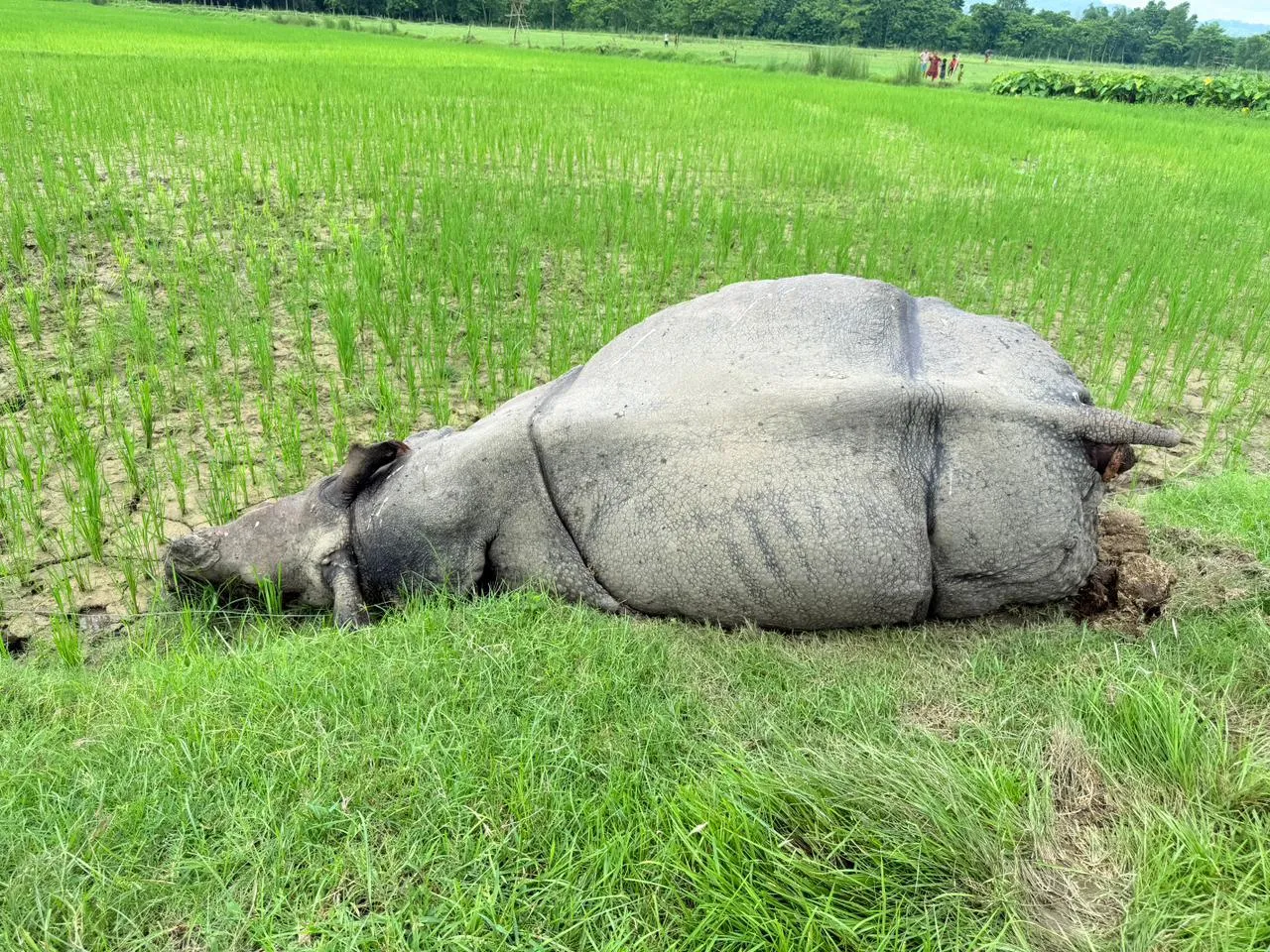
Caption: Rhino Dies After Colliding with Illegal Electric Fence. Courtesy Photo of CNP
KATHMANDU, Nepal - A male greater one-horned rhinoceros, approximately 20 years old, was found dead on Wednesday morning in a paddy field in Bhairabpur, Ward 2 of Madi Municipality, Chitwan. Officials suspect the incident occurred during the previous night.
Chitwan National Park (CNP) authorities reported that the rhino was likely electrocuted after coming into contact with an illegally installed electric fence surrounding the field. Local farmers often use such fences in an attempt to prevent wild animals from damaging their crops, despite ongoing awareness campaigns conducted by park officials warning against this dangerous practice.
“This continued use of illegal electric fencing poses a severe threat to our wildlife,” said Avinash Thapa Magar, Information and Conservation Officer at CNP. “Despite repeated efforts to educate farmers, this hazardous method remains widespread and ineffective in truly protecting crops or animals.”
Thapa emphasised the urgent need for intervention from senior government officials to find sustainable, long-term solutions that protect both the rhinos and the livelihoods of local farmers. “Government leadership is crucial to develop and enforce strategies that balance conservation goals with community needs,” he added.
The rhino’s horn and skin were recovered intact, suggesting poaching is unlikely. Law enforcement and forensic experts have been dispatched to conduct a thorough investigation, including a detailed autopsy. Due to the rhino’s considerable weight—ranging from 1,800 kg to 3,500 kg—relocating the carcass is challenging and risks damaging critical forensic evidence.
This tragic death echoes a similar incident last year, when a 13-year-old female rhino died from electrocution in Bharatpur Metropolitan City’s Ward 26, highlighting the persistent human-wildlife conflicts in the buffer zones around the park.
Chitwan National Park is home to 694 of Nepal’s 752 greater one-horned rhinoceroses (according to the 2021 National Rhino Count), making it the world’s second-largest habitat for this species after India’s Kaziranga National Park. Nepal has made impressive progress in anti-poaching measures, recording zero poaching deaths in the last fiscal year. However, threats such as electrocution and habitat encroachment continue to endanger these animals.
Last fiscal year, 28 rhino deaths were reported in Chitwan and its surrounding buffer zones, including one caused by electrocution. The park also runs weekly campaigns to control mosquito larvae and reduce disease risks, but incidents like this underline the urgent need for strengthened conservation efforts.
Towards Sustainable Solutions to Human-Animal Conflict
To address the ongoing human-wildlife conflict in areas surrounding Chitwan National Park, sustainable solutions are vital. Instead of illegal electric fencing, authorities and conservation groups are promoting community-based conflict mitigation strategies. These include the installation of solar-powered predator-proof fences, use of beehive fences—which deter large herbivores naturally—and improved crop protection techniques that do not harm wildlife.
Engaging local communities through education, alternative livelihood support, and compensation schemes for crop damage can reduce the incentive to use harmful methods. Additionally, collaborative wildlife monitoring and early warning systems help prevent encounters between animals and people.
Long-term success relies on integrated approaches involving government agencies, conservationists, and local farmers working together to protect endangered species like the rhino while sustaining the agricultural needs of the region.


