

Nepal UK
Picture: UNICEF
KATHMANDU, NEPAL – During recent health checks organised by the Kathmandu Metropolitan City, 126 women were found to have the human papillomavirus (HPV). HPV is the main cause of cervical cancer, which is a big health problem for women in Nepal. Out of 2,564 samples tested, 28 women had HPV types 16 and 18, which are responsible for 70% of cervical cancer cases. Another 98 women had other types of HPV.
Cervical cancer is the second most common cancer in developing countries and causes many deaths among Nepali women. It is thought that at least four women in Nepal die from cervical cancer every day. BP Koirala Memorial Cancer Hospital in Bharatpur sees over 700 women with cervical cancer each year.
Officials explained that they could only test for HPV types 16 and 18 at Bir Hospital's laboratory because they did not have the right testing kits for other types. This means that while 126 women were found to have HPV, the exact types for 98 of them are unknown.
Doctors want to make it clear that having HPV does not automatically mean a woman has cancer, but those with the virus must get tested every year. Women who have HPV types 16 and 18 are at a higher risk of developing cervical cancer. HPV comes in more than 100 forms, some being low-risk and others high-risk. More testing for other high-risk types, such as 6, 11, 31, 33, 45, and 52, is needed but could not be done due to a lack of testing materials.
Alongside the HPV checks, the city office also offered breast cancer screenings. They performed mammograms on 670 women and carried out breast examinations for 370. During these checks, one woman was found to have breast cancer. Other procedures like polypectomies (6 cases), cervical biopsies (11 cases), and breast biopsies (5 cases) were also performed.
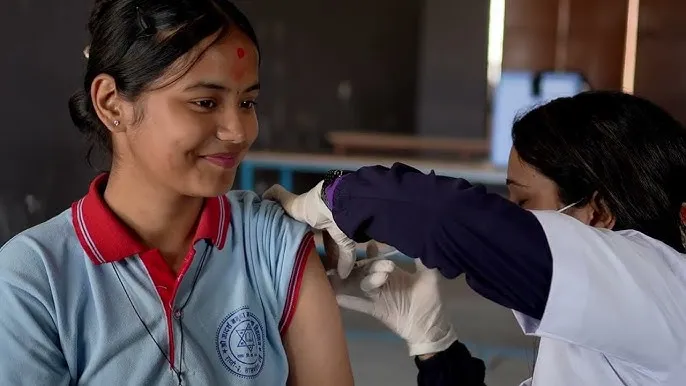
Experts say that treating cervical cancer early can prevent up to 80% of cases. Since most cervical cancers are linked to HPV, giving widespread vaccinations could greatly reduce the number of people affected by cervical cancer and other HPV-related cancers worldwide. Nepal's health ministry started a country-wide HPV vaccination campaign in February, aiming to vaccinate girls aged 10 to 14. Around 1.45 million girls in this age group received the vaccine, though the target was 1.688 million.
However, vaccination numbers were lower in parts of Madhesh Province and in larger cities like those in Kathmandu Valley. Doctors say the HPV vaccine works best if given before a person becomes sexually active, as its effectiveness is lower in adults. The Nepali government has decided to make the HPV vaccine a regular part of its immunisation programme. The World Health Organisation (WHO) also recommends HPV vaccination as a key step in preventing cervical cancer and other related diseases.
With early action and widespread vaccination, a healthier future for Nepali women is within reach.


