

Nepal UK
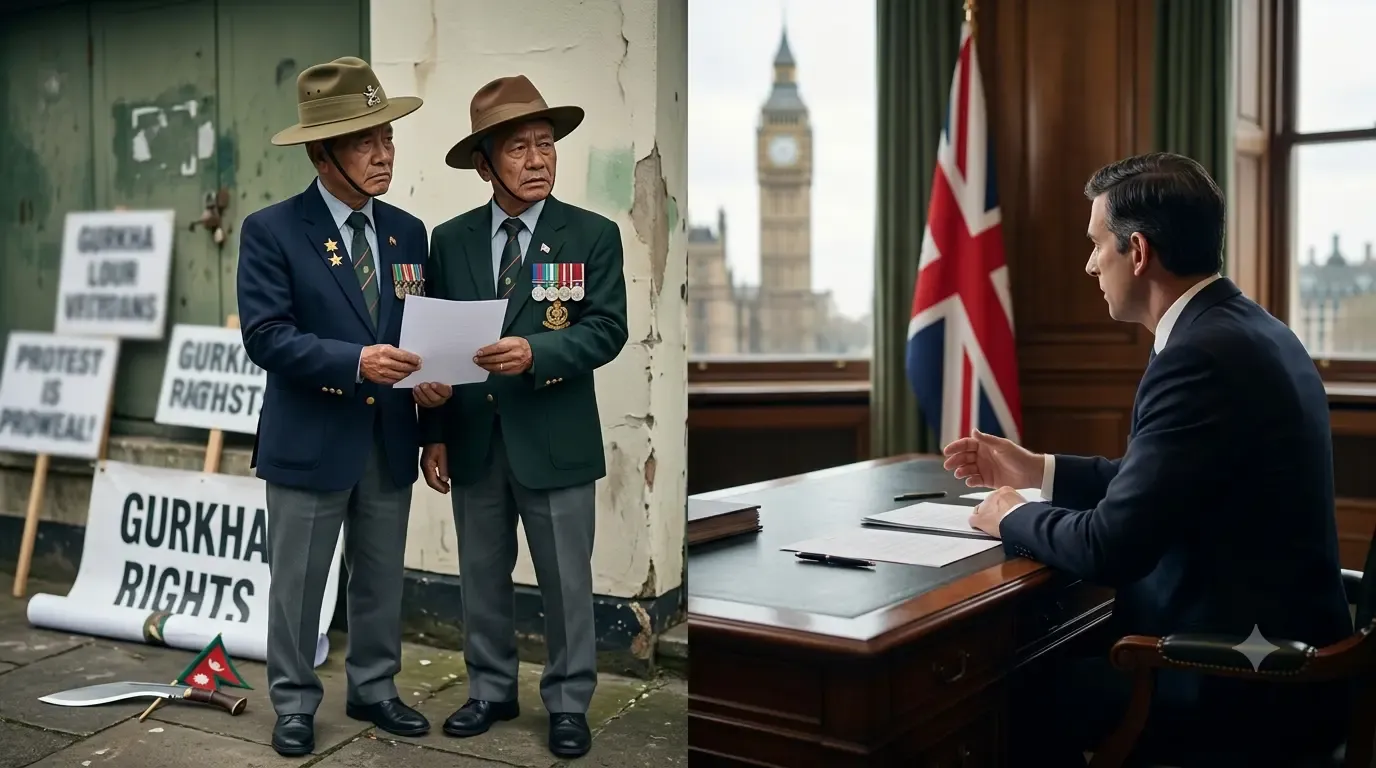
Nearly 35 years after former Gurkha soldiers first began fighting for pay and pension parity with their British counterparts, their campaign has entered its most pragmatic — and most fraught — phase yet. A coalition of veterans' organisations known as the G-Ten group, coordinated with Nepal's Acting Ambassador to the UK, Bipin Duwadi, has shelved the historic demand for full pension equality in favour of an 11-point "affordable solution" seeking one-off compensation, restored redundancy benefits, and state pension access. The UK Ministry of Defence has opened talks on the package, but as of mid-July 2026 no deal had been struck, and veterans were warning of a hunger strike in Kathmandu if progress stalls further.
The 11-point charter, submitted to the MOD and reported first by OnlineKhabar in March 2026, asks for pensions proportional to a 22-year British career for Gurkhas with 15 or more years of service, a one-off tax-free payment to compensate for historically lower allowances, restored redundancy and preserved-pension rights for those discharged after conflicts in Malaya, Borneo and the Falklands, and access to UK state pensions given that Gurkhas paid National Insurance-equivalent deductions. Crucially, the document drops the word "equal" — a deliberate shift after decades in which successive UK governments, regardless of party, insisted equal pensions were not possible for Gurkhas who served before 1993 (or 1997, depending on the scheme).
The Ministry of Defence's position, restated by Defence Minister Louise Sandher-Jones in February 2026, is that Gurkhas have received pensions matching other UK Armed Forces personnel since 2007, and that the 1948 Gurkha Pension Scheme for earlier service is "at least as good, and in many cases better" than British equivalents for comparable service length — a claim veterans and their advocates in Parliament dispute. Nepal's Supreme Court has separately directed the Nepal government to press the issue, and Foreign Minister Shisir Khanal used a 14 July phone call with then-Defence Secretary Dan Jarvis to push for resolution ahead of a fresh round of tripartite talks. Jarvis, newly appointed and facing an imminent government reshuffle, said he would "personally try to move the issue forward," while acknowledging the political uncertainty in London.
For the roughly 200,000-strong Nepali community in Britain, and especially the concentrations of Gurkha veterans and families in Aldershot, Farnborough and Folkestone, this is not an abstract diplomatic dossier — it is a live question of poverty, dignity and unfinished promises made to men who served the British Crown for decades. Retired Gurkha Major Jud Bahadur Gurung noted that the very fact London is now negotiating the 11-point package, having once refused to discuss pensions at all, should be read as incremental progress. Whether that progress converts into a signed agreement — and how any settlement would be funded and distributed — remains the central unresolved controversy going into the next round of talks.
Sources & Citations:


