

Nepal UK
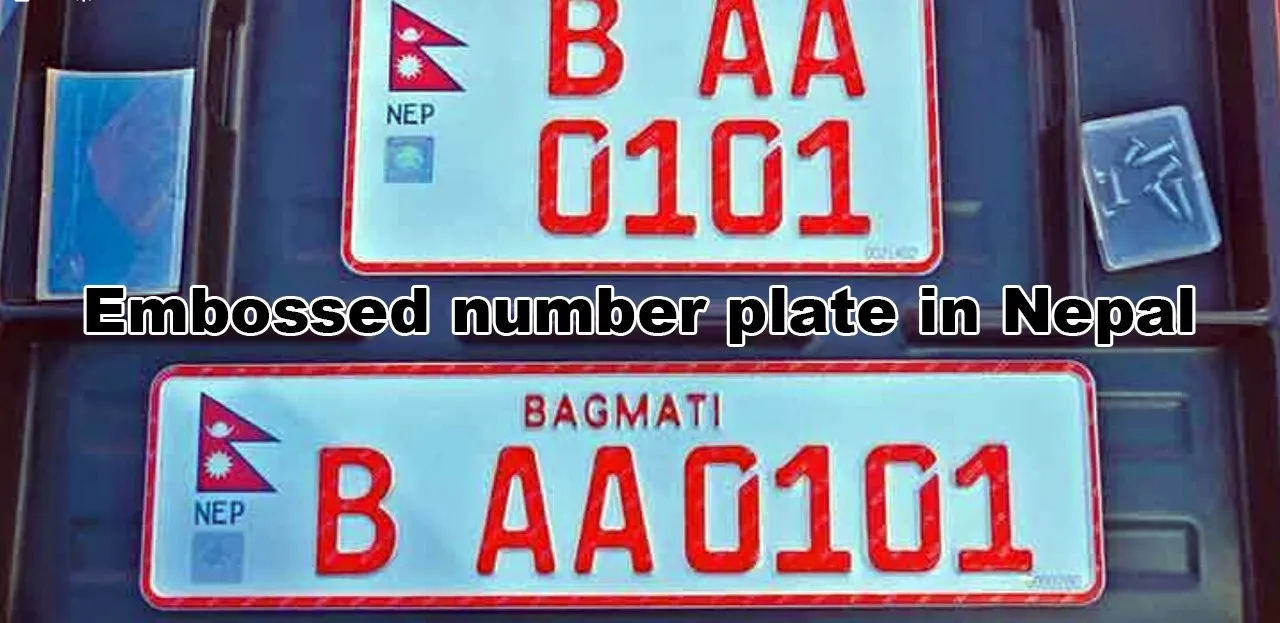
KATHMANDU — The government has reiterated its firm commitment to make embossed vehicle number plates (EVNP) mandatory, even as the policy faces widespread public criticism and mounting pressure from a looming contractual deadline. Despite temporarily waiving immediate fines, the Department of Transport Management (DoTM) has made it clear it will not back down from the controversial decision. Officials insist the move is crucial for modernizing vehicle management and ensuring greater security.
The government's resolve is in direct conflict with public sentiment. Transport associations and civil society groups are staging demonstrations against the high fees and the use of the English alphabet on the plates instead of the national Devanagari script. The DoTM maintains that the fees, which range from Rs. 2,500 for two-wheelers to Rs. 3,600 for heavy vehicles, are set by law and can only be changed with a formal amendment to the regulation.
Adding to the controversy is the legal dimension. DoTM Information Officer Ganeshman Singh Rai stated that the Supreme Court has already ruled in favor of English-language plates, a verdict the department is legally bound to follow. The court’s decision came after a prolonged legal battle over whether the plates should use the Nepali script.
The government is also under pressure to meet its contractual obligations. In 2016, it signed a Rs. 3.87 billion agreement with the joint Bangladeshi-American company, Decatur-Tiger IT, to produce 2.5 million plates by November 26, 2025. However, with the deadline fast approaching, progress remains critically behind schedule. So far, only 800,000 plates have been produced against an initial order of 1.2 million.
This massive shortfall exposes the government to the risk of substantial financial penalties. As Rai admitted, "If the deadline is not met, the government will be liable for compensation unless both parties agree to extend the contract period." This is seen by critics as a key reason for the government's hurried push to enforce the policy, as a failure to meet the target could result in a massive payout to the contractor.
The EVNPs feature a Radio Frequency Identification (RFID) chip, which has led to public concerns over surveillance. In response, DoTM officials have defended the technology, explaining that it was chosen specifically to protect citizens' privacy. They argue that unlike GPS, RFID allows for tracking only in specific enforcement scenarios, such as at entry and exit gates.
To speed up installation, the DoTM is expanding its services. Starting September 17, 2025, embossed plates will be issued from 21 provincial transport offices nationwide. This expansion from the current nine offices is a direct response to the logistical challenges of installing plates on a large scale. The department also plans to hire additional manpower, paying them a daily wage, to accelerate the process.


