

Nepal UK
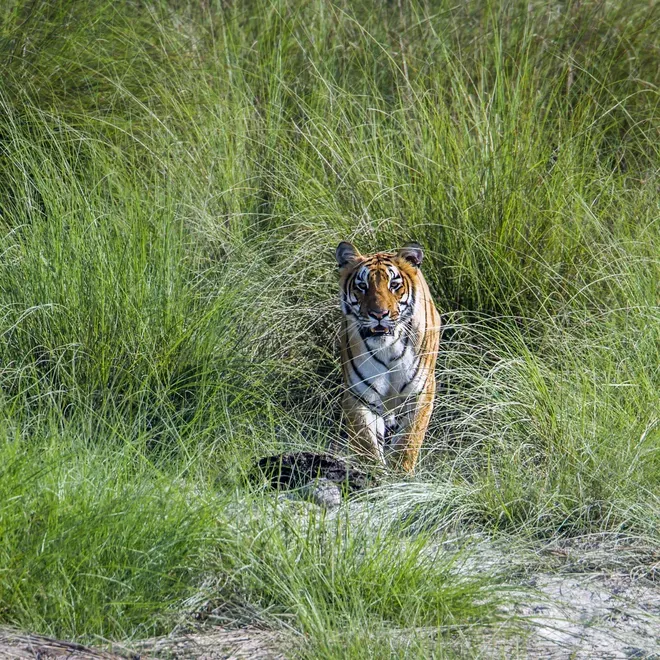
Kathmandu – The Global Environment Facility (GEF) is to provide 3.6 million US dollars to implement a project aimed at managing the human–tiger interface in Nepal.
Nepal’s Terai Arc Landscape faces rapidly rising human–tiger conflict as tiger numbers have nearly tripled — from 121 in 2009 to 355 in 2023 — putting communities in protected-area buffer zones at risk. At the same time, habitat fragmentation, degraded grasslands, shrinking wetlands, and growing human pressure are pushing wildlife into community lands, intensifying conflict across Chitwan–Parsa, Bardia–Banke, and Shuklaphanta National Parks.
The project “Managing the Human–Tiger Interface in Nepal” aims to advance human-wildlife coexistence by building consensus and capacity for coexistence, reducing impacts of human-tiger conflict, and improving habitats for tigers.
According to the World Wildlife Fund for Nature (WWF), the project does so through four components: (1) strengthening enabling conditions — improving national policy and municipal planning for conflict management and building frontline response capacity; (2) livelihoods support — engaging communities in social-behavior change, piloting faster and fairer relief and insurance, and supporting tiger-safe livelihood options; (3) habitat management — restoring grasslands and wetlands within park core zones to keep prey and tigers inside protected areas; and (4) knowledge exchange — documenting lessons and sharing them nationally and through the GEF-funded Global Wildlife Program. Together, these interventions aim to reduce conflict, benefit more than 121,000 people, and secure healthy tiger landscapes in Nepal.
Established on the eve of the 1992 Rio Earth Summit, GEF is a catalyst for action on the environment. Through its strategic investments, the GEF works with partners to tackle the planet’s biggest environmental issues.
The GEF is a unique partnership of 18 agencies — including United Nations agencies, multilateral development banks, national entities and international NGOs — working with 183 countries to address the world’s most challenging environmental issues.


