

Nepal UK
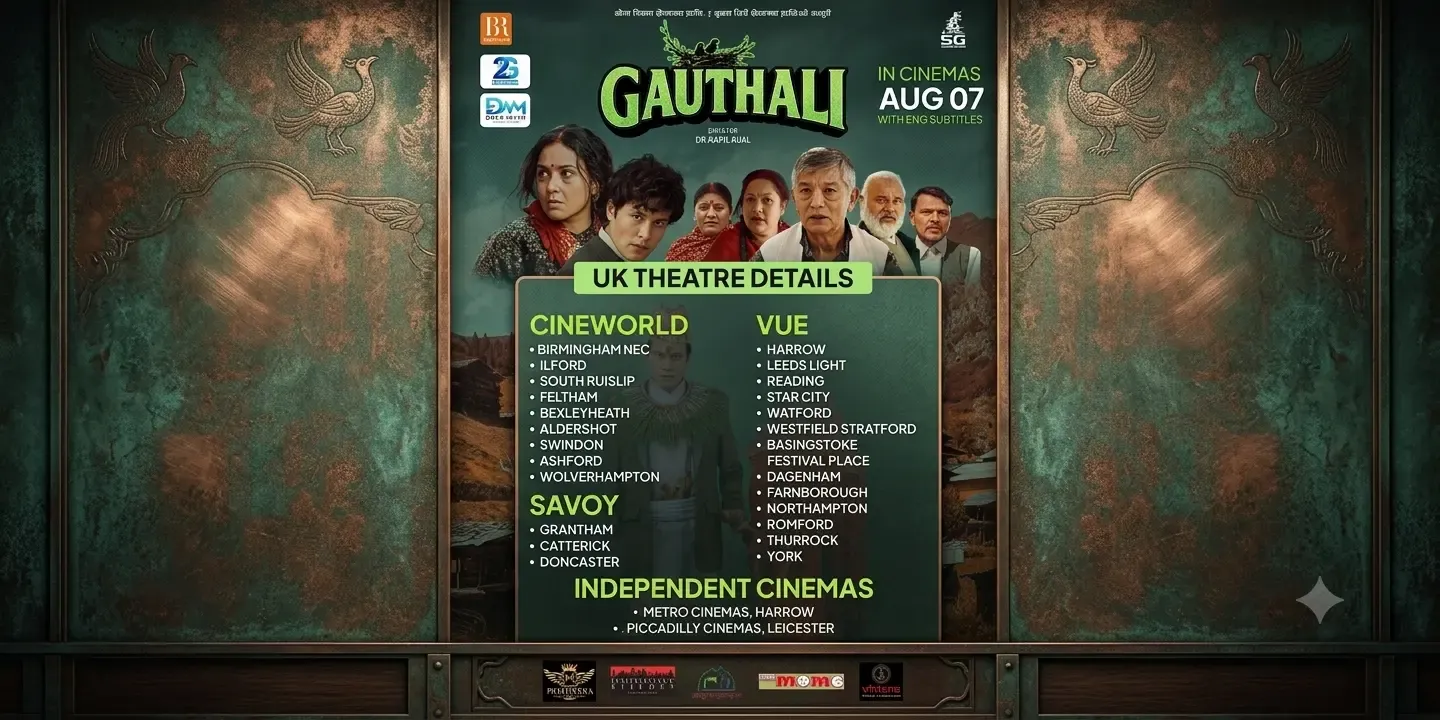
The Nepali social drama Gauthali, directed by UK-based dentist-turned-filmmaker Dr Kapil Rijal, opens today in cinemas across the United Kingdom and Ireland, with early ticket sales in several cities already showing first-night shows sold out or close to it. Screenings are confirmed at Cineworld, Vue cinemas and independent cinema branches including Aldershot, Feltham, Bexleyheath, Reading and South Ruislip, with booking charts shared within the community showing Bexleyheath's opening shows largely filled. For a UK Nepali diaspora that has waited years for a homegrown story told on its own terms — and subtitled for a British-born second generation — organisers and community members say Gauthali is shaping up to be among the most talked-about Nepali cinema releases the UK has seen.
Gauthali first opened in Nepal on 17 July 2026 and has already taken in over Rs 16 crore (roughly over £80,0000) at the domestic box office in its opening weeks, according to trade reporting, entering its second week with expanded showtimes on the strength of word-of-mouth. The film tells the story of a young girl, married off in childhood at her ailing grandmother's insistence, who is denied an education and stripped of her agency by rigid village tradition — before turning to education and quiet resistance to rebuild her life. Critics have been divided: The Kathmandu Post's review called it "a mediocre viewing experience...marred with plotholes small and big" while crediting the film for tackling patriarchy and mental illness "with compassion," whereas other outlets, including Makalu Khabar, praised it as "a powerful social drama that blends emotion and awareness."
The story carries unusually personal weight for its director. Dr Kapil Rijal, a dental surgeon and implantologist who has practised in the UK for nearly three decades and previously chaired the Britain–Nepal Chamber of Commerce, is the son of Dr Bhola Prasad Rijal — a prominent senior consultant obstetrician, gynaecologist and infertility specialist in Nepal, as well as a veteran Nepali writer, lyricist and filmmaker — who wrote the story for this Gauthali decades after producing an earlier, musical version of the same title. In an interview with Ratopati's Star and Stories, Dr Kapil Rijal explained that the original story drew on his own mother's experience of being married at the age of 12, and that he wanted to retell it "in a way that today's generation can easily understand and feel." Gauthali is his second feature as director, following the 2023 comedy-drama Harry Ki Pyari, which he has candidly said underperformed commercially — a lesson he says shaped his decision to shoot all of Gauthali's production, including music, in Nepal rather than outsourcing it abroad, so the film would carry "the fragrance of Nepali soil."
For the UK release, community organisers describe a grassroots promotional effort running in close coordination with the film's UK/Ireland distributor, with Dr Rijal's family — including his wife Dr Rajani Rijal and daughter Tara Rijal — reported to be working alongside friends and extended family to raise awareness of the screenings through community networks, workplaces, Nepali shops, restaurants, dinner-table conversations and gatherings across Nepali communities in England, Scotland, Wales and Ireland. That grassroots push echoes the UK success of Purna Bahadur Ko Sarangi, the 2024 Nepali drama about a Gandharva sarangi player striving to educate his son, which drew strong Nepali diaspora turnout in UK cinemas and is widely seen within the community as having proven that subtitled Nepali cinema can fill British multiplexes. Community members now predict Gauthali could surpass it as the biggest-ever Nepali theatrical release in the UK, though that claim — like the houseful reports from individual halls — reflects community and organiser accounts rather than independently audited box-office data, which distributors have not yet published for the UK run.
What is clear is the cultural resonance. For first-generation Nepalis in Britain, Gauthali's village setting and its portrayal of child marriage, gendered discrimination in access to education, and the slow unravelling of rigid tradition speak to a Nepal many left behind but still recognise. For second-generation, UK-born Nepalis, English subtitles open a rare door into that same history and into conversations with parents and grandparents about the lives they lived before migration — precisely the "bonding across generations" that community organisers say they're hoping the film's cinema run will spark, in living rooms as much as in the stalls.


