

Nepal UK
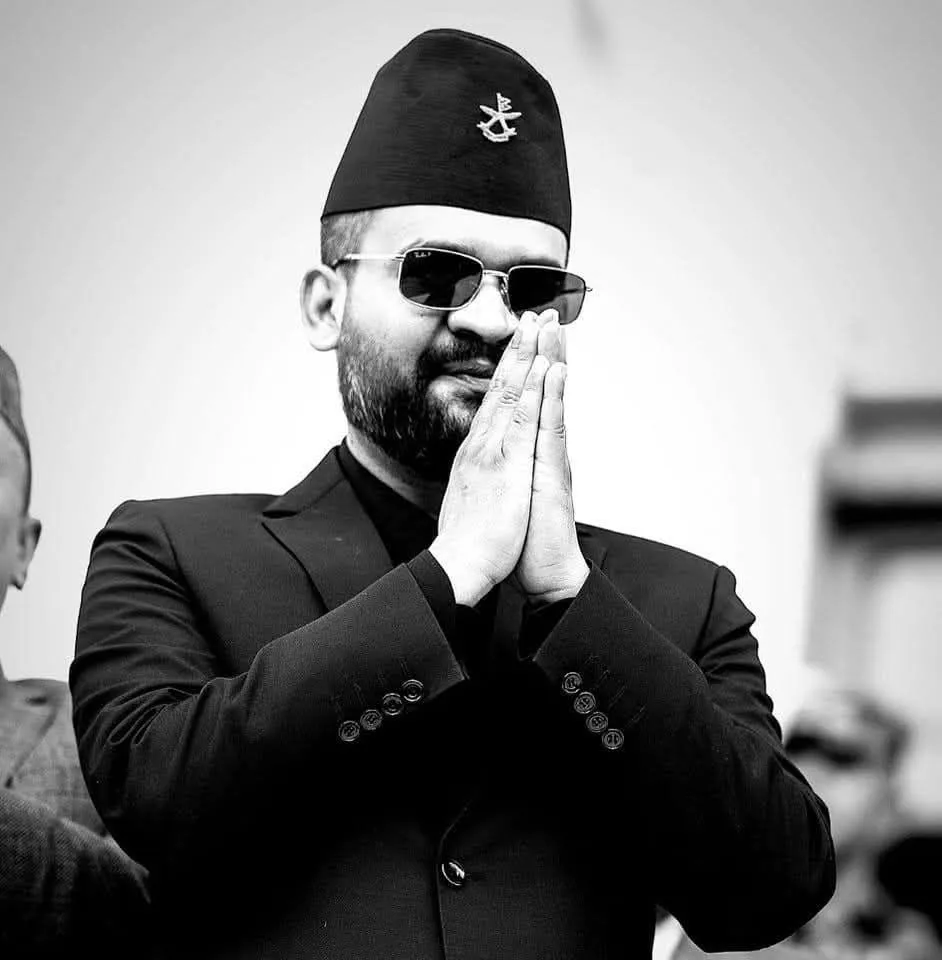
Five months after becoming, at 35, the youngest head of government anywhere in the world, Nepal's Prime Minister Balendra "Balen" Shah is now leading his country through its deadliest natural disaster in a generation — a catastrophic flash flood that has killed more than 1,340 people, left thousands unaccounted for, and forced the rapper-turned-engineer-turned-premier to trade protest anthems for crisis command.
Balendra Shah's rise has always been unlikely. Born in April 1990, he trained as a structural engineer, built a following writing rap songs about corruption and Kathmandu's broken civic life — his 2012 track "Sadak Balak" ("Street Child") became an anthem for a generation frustrated with the political old guard — and then, in 2022, turned that following into an improbable landslide win as an independent candidate for Mayor of Kathmandu. When Nepal's 2025 Gen Z-led protests toppled the sitting government, Shah stepped into national politics, defeated former prime minister KP Sharma Oli in the Jhapa-5 constituency by a record margin, and led his three-year-old Rastriya Swatantra Party to 182 of 275 seats in the March 2026 general election. He was sworn in as Nepal's prime minister on 27 March 2026, becoming both the world's youngest sitting state leader and the country's first prime minister from the Madheshi community.
That improbable story is now colliding with an unimaginably hard test. On the morning of 26 August, an ice-rock avalanche in the Himalaya triggered a flash flood down the Bhotekoshi and Trishuli rivers, tearing through Timure, Syabrubesi and Betrawati in Rasuwa district and sweeping downstream through Nuwakot, Dhading, Chitwan, Gorkha, Tanahun and both Nawalparasi districts — even reaching across the border into India. As of the Kathmandu Post's 5 September count, the confirmed death toll stood at 1,342, with roughly 3,900–5,000 people still unaccounted for, 292 injured, and entire settlements, bridges, hydropower plants and a stretch of the only overland highway to Tibet destroyed. The National Disaster Risk Reduction and Management Authority and Nepal Police have called it one of the country's worst disasters in years, with reconstruction costs estimated as high as $5 billion.
What has stood out is how directly Shah has owned the crisis rather than delegate it. Briefing the House of Representatives on 2 September, he told MPs the tragedy was "not only the suffering of Rasuwa, Nuwakot and Dhading. It is a shared blow to the heart of the entire country," adding: "We have no alternative but to fight with determination and courage, and we are fighting." He described chairing an emergency meeting of the National Council for Disaster Risk Reduction and Management within hours of the flood, activating the Monsoon Response Command Post, mobilising Nepali Army and private helicopters for search and rescue, declaring the affected municipalities crisis zones for three months, releasing emergency disaster funds to Rasuwa, Nuwakot and Dhading, allocating 100 trauma beds in Kathmandu, and ordering free medical treatment for the injured. By his own account to Parliament, government agencies had rescued nearly 12,000 people and recovered over 1,100 bodies by early September, while restoring electricity to the vast majority of affected areas within days.
Shah's government also made a striking sovereignty call in the flood's immediate aftermath: it turned down offers of foreign search-and-rescue teams from India, China, the US, UK, Japan and others — including India's National Disaster Response Force — saying Nepal's own army and police could handle the operation, and asking instead that all international support be channelled as cash through the Prime Minister's Relief Fund. Officials cited hard lessons from the 2015 earthquake, when a crowded, uncoordinated influx of foreign rescue teams created its own management problems. The call has drawn substantial international backing regardless — the Asian Development Bank, World Bank, United States, United Kingdom and technology giant Nvidia (with a $10 million donation, among Nepal's largest-ever corporate contributions to a disaster) have all pledged support, while foreign ministers from Washington to London have been in direct contact with Kathmandu.
The story is not one of unqualified triumph, and NepalUK's commitment to evidence-based reporting means the criticism deserves equal space. Civil society activists have publicly faulted the Shah government's heavily centralised, military-led response for sidelining elected local officials and slowing the flow of relief supplies to survivors on the ground, even while praising the Army, Police and Armed Police Force's rescue work itself. Commentary in the Nepali and international press has also pointed to Shah's relative public reticence — despite visiting affected districts, he did not deliver a formal address to the nation until roughly a week after the disaster struck, a silence some analysts have called uncharacteristic caution from a leader who built his political brand on direct, unfiltered communication. Shah has defended the government's record in Parliament, insisting ministers acted "as soon as they received information" and coordinated with provincial and local governments "from the very beginning."
For the Nepali diaspora in Britain — many of whom trace family roots to Gorkha, Rasuwa, Nuwakot and the wider central hill districts now devastated by the flood, and many of whom have poured relief funds home through NRNA UK, TamudheeUK and dozens of community groups in recent days — Shah's handling of this crisis will likely define how his premiership is remembered as much as any policy platform. He is due to address the UN General Assembly on 24 September, where Kathmandu Post reporting indicates he intends to press wealthy nations on climate-driven disaster risk in the Himalaya — a message that will land differently in the room depending on how Nepal's own recovery is judged by then.
Whatever the final verdict, the underlying story remains a striking one: a Kathmandu street rapper who once sang about a broken state is now the person the state turns to in its worst hour — tested, at 36, on a scale no head of government his age has ever faced.


