

Nepal UK
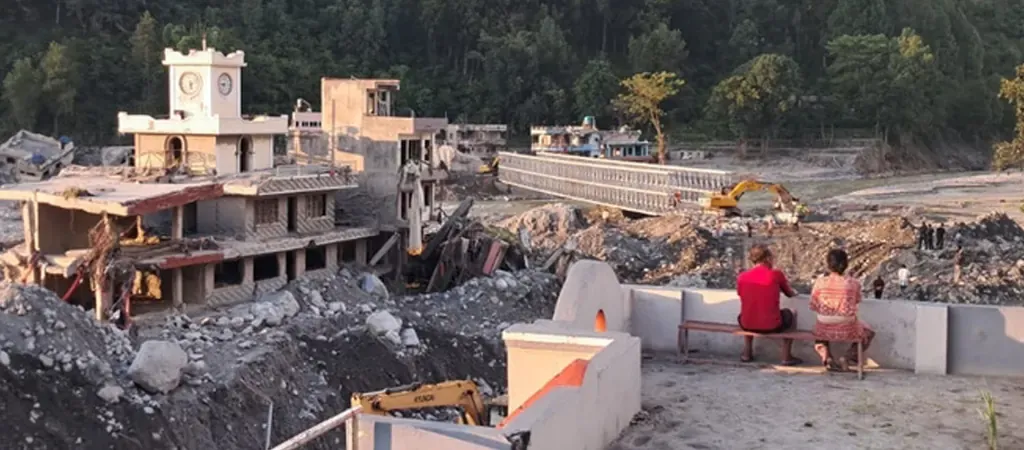
Photo : Kathmandu Post
Two months after a flash flood swept through the Bhotekoshi valley on 26 August, hundreds of displaced people in Nuwakot and Rasuwa are still in holding centres, while others have gone back to cracked and unsafe houses because no alternative has arrived.
Reports from the affected districts say 943 displaced people were living in 13 holding centres as of 16 October, according to the National Disaster Risk Reduction and Management Authority (NDRRMA). The state has released Rs370 million for relief. By mid-October Rs184.86 million had been paid to 4,108 households identified by local governments, with each receiving Rs45,000 in a first instalment.
A gap between policy and payment
On 11 September the Cabinet approved monthly rent assistance for up to six months: Rs15,000 for families of up to four people, plus Rs2,000 for each additional member. In practice, the benefit has been slow to arrive. Rabindra Nepal, ward chair of Bidur-7 and spokesperson for Bidur Municipality, said that no displaced family in the municipality had yet received rent assistance. Ram Bahadur KC, an under-secretary at the NDRRMA, said local governments are responsible for identifying and verifying beneficiaries, and that the authority's executive committee has ruled out rebuilding inside the flood-risk zone.
That decision creates its own difficulty. A committee has identified more than 3,000 land parcels in the two districts, and the Department of Urban Development and Building Construction has surveyed 2,027 households. Temporary housing is advancing: a public notice was issued on 8 October, capsule-house designs were prepared on 9 October and land development was completed on 11 October. Yet some families have not waited. About 15 families in one Devighat neighbourhood are reported to have returned to damaged houses.
Questions over rebuilding
Residents have raised questions about river setbacks, where permanent homes can be built and how heritage structures will be protected. The reporting available does not give an overall death toll for the flood, and NepalUK has not been able to verify one independently. It does note that relatives of those who died have not received funeral expenses from the state.
International support and climate finance
A National Assembly special committee, chaired by Krishna Prasad Poudel, has asked the Agriculture Ministry for ward-level damage data covering 49 wards. The ministry says a proposal of up to USD 20 million could be submitted to the Loss and Damage Fund. Germany's Parliamentary State Secretary Bärbel Kofler is on a four-day visit that includes Nuwakot; Germany has provided more than EUR 11 million for the flood response, according to Nepali reports.
In Nuwakot, officials have received training on the Bhote Koshi Flood Victims Housing and Livelihood Grant process and the RMIS system, led by Chief District Officer Shambhu Prasad Regmi, suggesting a longer-term housing grant is being prepared.
What the UK diaspora has done
The flood prompted a response from Nepali communities in Britain. The Colchester Nepalese Society, for example, reports raising more than £21,000 through a public appeal and direct donations (see our separate briefing). Such funds reach households only if local verification and distribution work, which is where the delays described above matter most.
Outlook
The test over the coming weeks is whether verification of households, rent payments and temporary housing can move fast enough before winter. New rain from the remnants of Cyclone Arnab, forecast from 29 October, may add pressure on slopes and riverbanks in the same districts, although forecasters expect the system to weaken. The Loss and Damage Fund proposal is still only a proposal and no approval has been reported.


