

Nepal UK
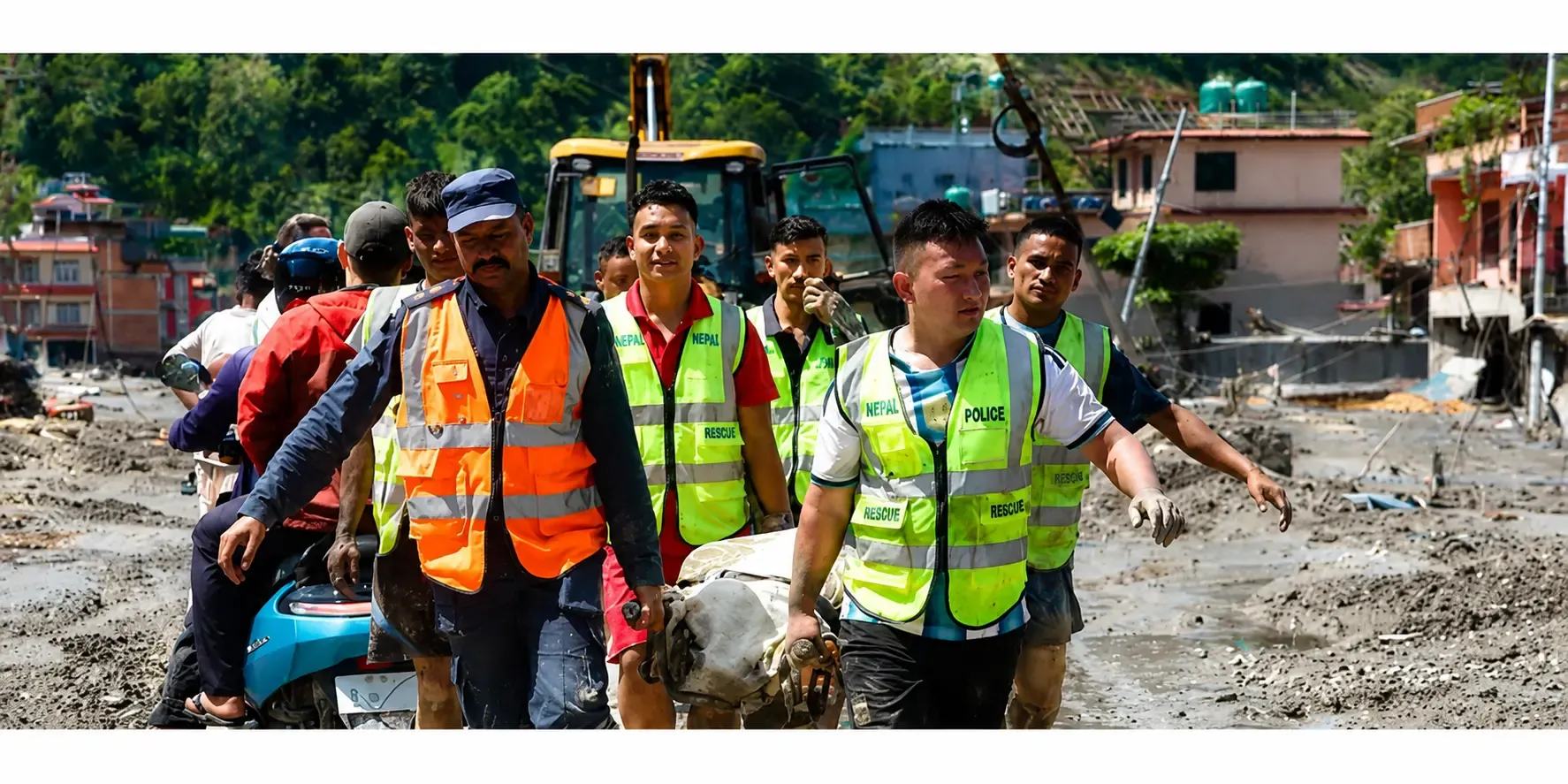
Nepal Police confirmed on 1 September that 4,270 people swept up in the Bhote Koshi–Trishuli flood have now been rescued, while 4,599 remain missing — a granular, name-by-name accounting that is both the most detailed picture yet of the six-day-old disaster and a reminder of how far Nepal's official agencies still are from agreeing on a single set of numbers.
According to Police Headquarters in Naxal, the 4,270 rescued break down as 3,003 men, 1,254 women and 13 unidentified individuals; 3,453 of them remain in holding centres — 2,466 in Nuwakot, 398 in Rasuwa, 329 in Kathmandu and 260 in Dhading. On the recovery side, police say 1,010 bodies have been found in total: 385 men, 209 women, 30 boys, 35 girls and 351 partial remains too fragmentary to classify by age or sex. Of those, 581 (121 women, 198 men, 262 unidentified) have already been buried under standard disaster-management protocol pending DNA matching, while only 56 have so far been formally identified and returned to relatives — a gap that signals how much identification work remains before families get certainty. The missing total of 4,599 splits into 2,980 Nepali citizens (2,312 men, 368 women), 581 foreign nationals (251 men, 330 women) and a further 1,329 people reported missing by phone call to police hotlines rather than through formal, verified channels — the last category a useful reminder that "missing" figures in a disaster this size are still provisional, inflated by duplicate reports and un-cross-checked calls as much as they are by genuine unresolved cases.
Read against other official statements from the same week, the picture gets harder to reconcile rather than easier. The Ministry of Foreign Affairs' own briefing on Monday, 31 August — a day before the police figures above — put the toll at "over 10,000 people rescued... including over 323 foreign nationals" and roughly 590 foreign nationals still missing from 39 countries, alongside 903 bodies recovered. Nepal's National Disaster Risk Reduction and Management Authority separately reported, on the morning of 1 September, 987 confirmed dead and approximately 3,916 missing. Set side by side, the bodies-recovered figures roughly track each other (903 → 987 → Police's cumulative 1,010, a plausible rising sequence over 24–48 hours), but the rescued and missing totals do not: MOFA's "over 10,000" rescued a day earlier sits awkwardly next to Police's 4,270 the following day, and the missing count moves between roughly 3,916 and 4,599 depending on which agency and which hour is cited. The likely explanation is definitional rather than sinister — MOFA's figure may include people who self-evacuated or were assisted without being processed through police holding centres, while the 1,329 "reported by phone call" category inflates Police's missing count relative to NDRRMA's more filtered figure — but the Foreign Ministry's own spokesperson has explicitly asked media and the public "to rely on officially verified information," an implicit acknowledgement that Nepal's various emergency-response bodies are not yet publishing from a single, shared dataset. For a UK Nepali reader trying to establish whether a specific relative is alive, missing, or among the dead, that lack of a unified national register is the single most consequential gap in the response right now.
The same six-day period has also produced early evidence of exactly the exploitation risk that official channels are designed to guard against. Nepal Police confirmed arrests in Chitwan after video circulated showing gold jewellery being stripped from the body of a woman swept away by the Narayani river; the detention of 29 people in Dhading accused of breaking open a flood-displaced bank safe and taking more than Rs 9.2 million in cash, which police say they have recovered; and the arrest of a man in Ramechhap for allegedly running a fake Facebook fundraiser soliciting donations in flood victims' names. None of these cases involves the PMDRF or any registered charity, but they are precisely the pattern — improvised appeals and unregulated cash flows in the fog of a disaster — that gives weight to the government's repeated public request that donors "verify the authenticity of the QR/link before making the payment" and route contributions only through officially published channels.
On the international response, the Foreign Ministry's briefing confirmed specialist tunnel-rescue teams from India (11 personnel) and China (9) working at Mailung/Chilime and Upper Trishuli 3A respectively, a Republic of Korea team, an 18-member Indian forensic and DNA team present since 29 August, and a Singaporean Disaster Victim Identification team being mobilised — technical capability Nepal has said it lacks domestically for large-scale identification work. The UK featured in the ministry's account only as a source of relief supplies "coming from... UK" alongside more than a dozen other countries, with no UK personnel or forensic teams mentioned in the briefing reviewed by NepalUK — worth noting for readers who have asked what practical role, beyond the earlier £5 million pledge and consular Rapid Deployment Team, Britain is playing in the search itself.


