

Nepal UK
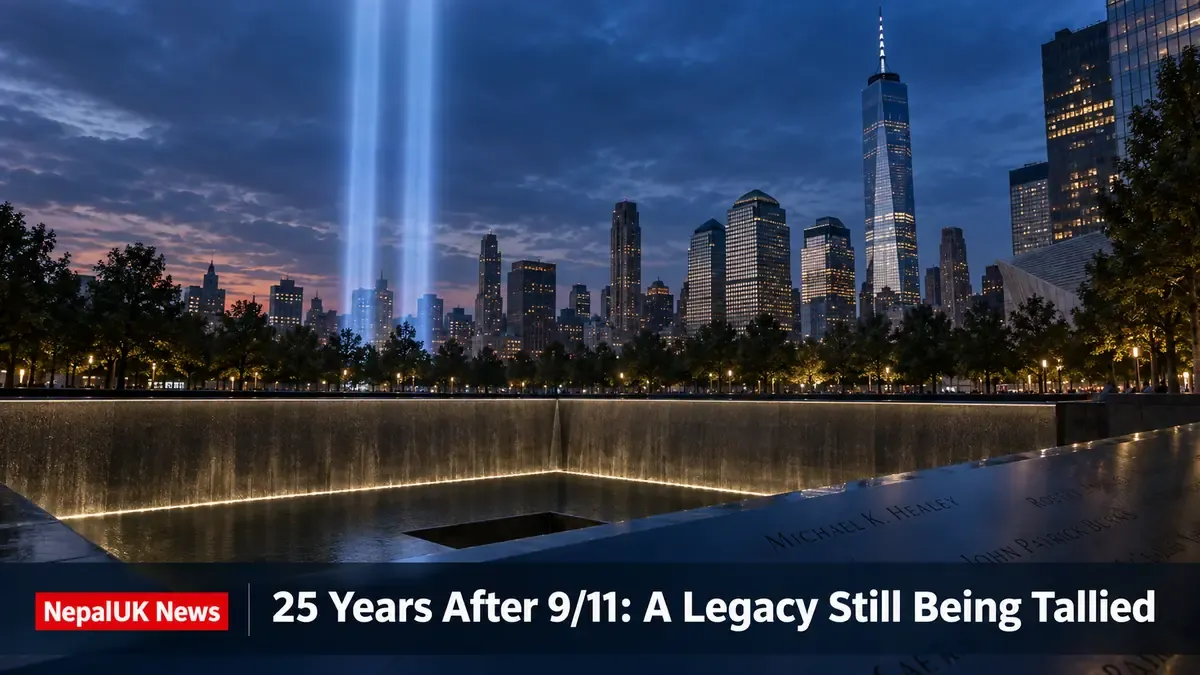
Twenty-five years after nineteen hijackers turned four airliners into weapons, the anniversary lands not as closure but as an accounting. At the National September 11 Memorial in New York, victims' families will read aloud the names of the 2,983 killed on 9/11 and in the 1993 WTC bombing, with moments of silence marking each strike and collapse. President Trump is set to commemorate the day at the Pentagon, a reminder that the attacks remain politically load-bearing even a quarter-century on.
The harder story is what followed. Brown University's Costs of War Project — the most-cited independent tally — puts direct and indirect deaths from the post-9/11 wars at roughly 4.5–4.7 million people across Afghanistan, Iraq, Pakistan, Yemen, Somalia and beyond, with U.S. financial outlays approaching $8–10 trillion depending on methodology and whether veterans' long-term care and interest on war debt are included. Estimates vary by source and definition (direct combat deaths versus indirect deaths from disease, displacement and destroyed infrastructure), so these should be read as informed ranges, not precise counts. Separately, roughly 15,000 American service members, DoD personnel and contractors died in the conflicts through 2021, and the campaign's footprint reportedly extended into some 80 countries — about 40% of the globe — displacing an estimated 37 million people.
The analytical debate now isn't whether the War on Terror was costly, but whether it worked. Al-Qaeda's core leadership was dismantled and Osama bin Laden killed, yet the ideology metastasized into ISIS and a diffuse array of regional affiliates; Afghanistan returned to Taliban rule in 2021; and the domestic legacy — the surveillance state, Guantánamo's unresolved detainees, and a permanently expanded homeland-security bureaucracy — remains contested terrain in American politics a generation later.
What's verified: the memorial ceremony details and the broad cost/casualty ranges above, sourced to the 9/11 Memorial & Museum and the Costs of War Project. What's contested: causal claims about whether specific interventions prevented or provoked further terrorism — those remain matters of ongoing scholarly and political dispute, not settled fact.


